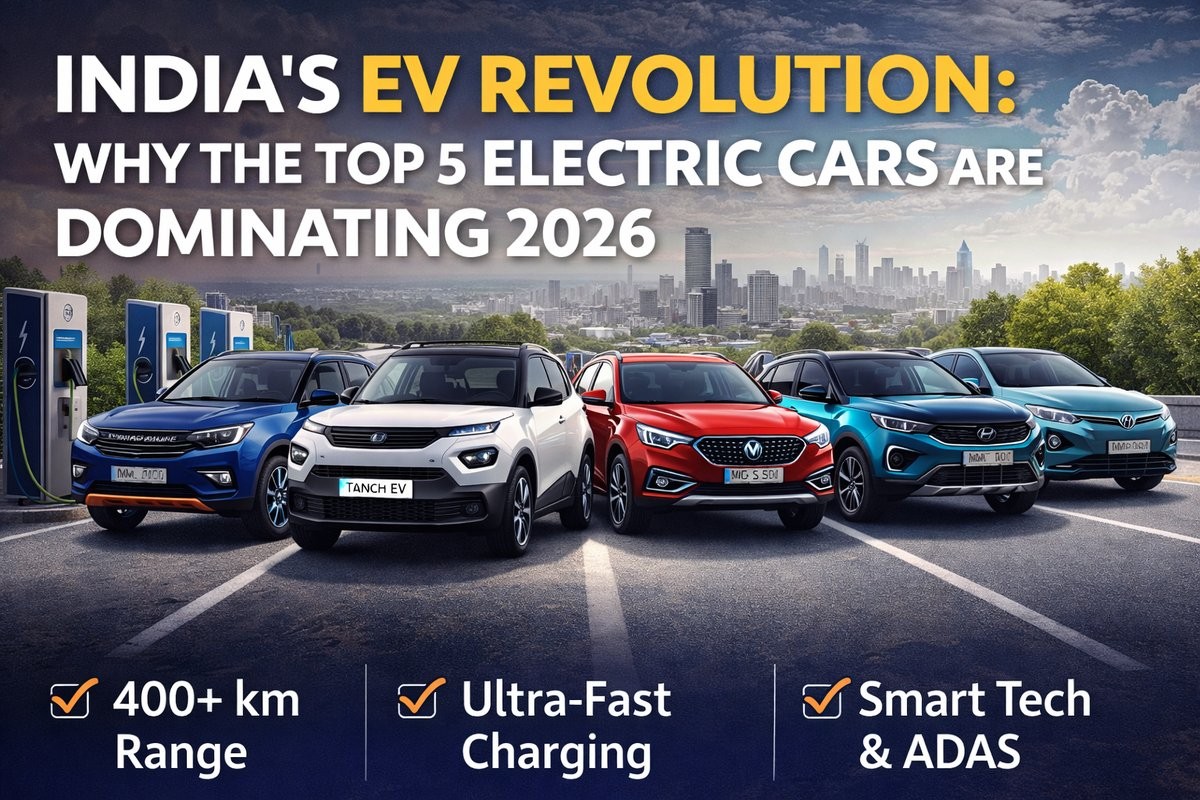
The Indian automotive industry is witnessing a dramatic transformation in 2026 as electric vehicles rapidly move from niche products to mainstream transportation choices. What was once a conversation filled with skepticism about charging infrastructure and battery performance has now evolved into a nationwide movement toward cleaner mobility. Electric cars are no longer seen simply as eco-friendly alternatives but as technologically advanced vehicles offering superior driving experiences, cutting-edge connectivity, and lower operating costs.nnDuring the first quarter of 2026, India’s EV market reached a major milestone. According to industry data, electric cars now account for nearly 15 percent of new vehicle registrations in major metropolitan cities. This surge is fueled by improvements in battery technology, expanding charging infrastructure, and government initiatives designed to accelerate EV adoption.nnOne of the key factors driving this shift is the growing accessibility of electric vehicles. In earlier years, EVs were often considered luxury products due to their higher purchase price. However, new financing models such as Battery-as-a-Service (BaaS) have dramatically reduced the initial cost of ownership. With this model, buyers can purchase the car without the battery and subscribe to battery services separately, bringing EV prices closer to traditional petrol-powered hatchbacks.nnAt the same time, manufacturers are introducing vehicles designed specifically for electric mobility rather than modifying existing petrol models. These “Born Electric” platforms allow companies to maximize interior space, improve aerodynamic efficiency, and optimize battery placement for better performance and safety. As a result, the top five electric cars dominating the Indian market in 2026 are purpose-built EVs that combine performance, comfort, and efficiency.nnOne of the biggest concerns among early EV buyers was range anxiety—the fear that a vehicle might run out of power before reaching a charging station. However, this concern is rapidly fading. Modern electric vehicles in India now offer real-world ranges of approximately 400 to 450 kilometers on a single charge. This range comfortably supports common intercity travel routes such as Delhi to Chandigarh or Mumbai to Pune without requiring a mid-journey charging stop.nnAnother major catalyst for EV growth is the expansion of ultra-fast charging infrastructure. India has significantly increased the number of DC fast charging stations across highways and urban centers. High-power chargers capable of delivering up to 120 kW are now commonly installed at highway food plazas, petrol stations, and shopping complexes. With these chargers, most electric cars can recharge from 10 percent to 80 percent in roughly 25 minutes, making long-distance travel much more convenient.nnTechnology integration has also become a defining feature of modern electric cars. Today’s EVs function more like smart connected devices than traditional vehicles. Advanced infotainment systems, smartphone integration, voice assistants, and cloud connectivity allow drivers to control and monitor their cars remotely. Many EV owners can pre-cool the cabin, check battery status, locate charging stations, or even schedule charging sessions directly from mobile apps or wearable devices.nnManufacturers are also equipping their latest models with advanced driver assistance systems (ADAS). These systems include features such as adaptive cruise control, automatic emergency braking, lane-keeping assistance, and blind-spot monitoring. On busy Indian roads, such technologies have been shown to significantly reduce minor collisions and improve overall driving safety.nnAnother important development in India’s EV landscape is the localization of vehicle software and digital services. Companies such as Tata Motors, Mahindra, and MG Motor have customized their vehicle interfaces to better suit Indian users. Voice assistants can now recognize regional accents, and infotainment systems offer multiple language options, making electric cars more accessible to a wider audience.nnGovernment policies have also played a crucial role in accelerating EV adoption. Incentives under the FAME-III scheme and other state-level subsidies have reduced the effective purchase cost of electric vehicles. Combined with declining battery prices and improved manufacturing efficiency, these incentives are helping to make EVs more affordable than ever before.nnIndustry experts believe that 2026 could mark the beginning of a new era in Indian mobility. Electric vehicles now offer a compelling combination of performance, technology, and sustainability that rivals or even surpasses conventional petrol and diesel vehicles. With rapid improvements in battery technology, growing charging networks, and strong government support, the EV ecosystem is expected to expand even further over the coming years.nnFor consumers considering a new car purchase, the current market conditions make electric vehicles an increasingly attractive option. With long driving ranges, fast charging capabilities, and advanced connected features, today’s EVs are designed not only for present needs but also for the future of transportation.