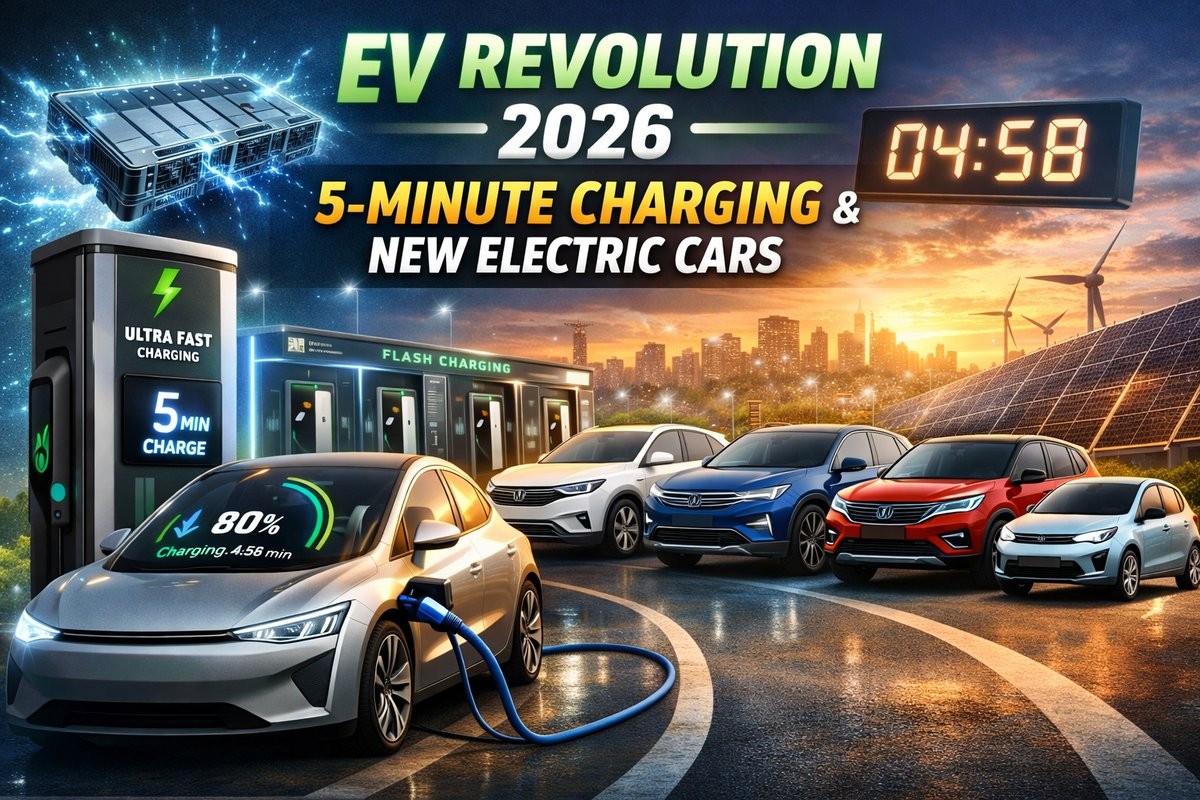
The electric vehicle market is entering a new phase of innovation in 2026, driven by breakthroughs in battery technology and a wave of new EV launches expected across global markets. Automakers, technology companies, and governments are investing billions of dollars into electrification programs aimed at reducing emissions and modernizing transportation systems. This momentum is helping electric vehicles become faster to charge, capable of traveling longer distances, and increasingly affordable for everyday consumers.nnOne of the biggest highlights in the EV industry this week came from Chinese automotive giant BYD, which unveiled its second-generation Blade Battery equipped with ultra-fast charging technology. The company’s latest innovation represents a major step forward in solving one of the biggest challenges facing electric vehicles: long charging times. According to the company, the new battery technology is capable of charging from 20 percent to 97 percent in less than twelve minutes when connected to high-power charging infrastructure. Even more impressive is the flash-charging capability that allows some versions of the battery to charge from 10 percent to 70 percent in approximately five minutes under optimal conditions.nnThis development could dramatically transform the electric vehicle ownership experience. For many potential buyers, charging time has remained one of the primary barriers preventing them from switching from petrol or diesel vehicles to electric cars. Traditional fast charging stations typically require between thirty minutes and one hour to recharge a battery to a usable level. With the introduction of ultra-fast charging systems capable of replenishing most of the battery within minutes, electric vehicles may soon offer convenience levels comparable to conventional fuel vehicles.nnThe second-generation Blade Battery also offers impressive improvements in driving range and durability. Vehicles equipped with this new battery technology are expected to deliver a driving range of up to 777 kilometers on a single charge, depending on vehicle design and battery configuration. Some high-end electric models using advanced battery packs could potentially exceed 1,000 kilometers of range, pushing electric vehicles closer to long-distance travel capabilities traditionally associated with combustion-engine vehicles. Another notable feature of the battery is its ability to operate efficiently even in extremely cold environments, a factor that has historically reduced battery performance in electric vehicles operating in colder climates.nnTo support this new generation of battery technology, BYD has also announced plans to significantly expand its charging infrastructure. The company intends to install approximately 20,000 ultra-fast flash-charging stations around the world by 2026. These high-power charging stations will be designed to deliver extremely high charging speeds and will likely be installed along highways, urban centers, and key transportation corridors. The expansion of such infrastructure will be essential to supporting widespread adoption of ultra-fast charging EVs.nnAt the same time, the electric vehicle boom is being fueled by an increasing number of new models entering the market. Industry analysts predict that more than twenty-five new electric cars will launch globally between 2026 and 2028, with many manufacturers focusing on SUVs and compact electric vehicles designed for mass-market buyers. Several upcoming electric models are already generating strong interest among consumers and automotive enthusiasts. Vehicles such as the Tata Sierra EV, Mahindra BE.07, Toyota Urban Cruiser EV, Volkswagen ID.4, and MG Cloud EV are expected to play a significant role in expanding the EV market in both developed and emerging economies.nnMost of these new electric vehicles are expected to offer driving ranges between 300 kilometers and 500 kilometers depending on battery capacity and vehicle type. Improvements in battery energy density and vehicle efficiency are allowing manufacturers to deliver longer ranges while keeping vehicle prices competitive. This trend is particularly important for markets such as India, where affordability and practicality remain critical factors for EV adoption.nnGlobally, the electric vehicle market continues to grow rapidly as governments introduce policies designed to reduce carbon emissions and encourage the transition to clean energy transportation. Many countries are offering financial incentives, tax benefits, and subsidies to promote electric vehicle purchases. Governments are also investing heavily in charging infrastructure, public transport electrification, and renewable energy integration to support the EV ecosystem.nnSeveral major cities around the world are now targeting fully electric public transportation systems by the end of this decade, with some aiming to achieve this goal as early as 2026. Buses, taxis, and government fleets are increasingly being replaced by electric alternatives, reducing urban air pollution and lowering operational costs. Meanwhile, global automakers are gradually shifting their production strategies toward electric mobility, with many companies announcing plans to phase out internal combustion engine vehicles within the next decade.nnThe importance of these technological advancements cannot be overstated. One of the most common concerns among EV buyers has been the fear of running out of battery power before reaching a charging station, a problem often referred to as range anxiety. Another concern has been the time required to recharge the battery during long journeys. The introduction of ultra-fast charging batteries and high-power charging networks has the potential to solve both of these problems simultaneously.nnAs charging times decrease from thirty to sixty minutes down to under ten minutes, electric vehicles will become far more practical for long-distance travel. Drivers may soon be able to recharge their vehicles during a short stop similar to refueling a petrol car. This convenience could significantly accelerate EV adoption worldwide, encouraging millions of consumers to consider electric vehicles as their primary mode of transportation.nnLooking ahead, experts believe the electric vehicle industry is entering a new era defined by rapid technological progress and global competition. Battery innovation, software-driven vehicle platforms, artificial intelligence-based energy management systems, and advanced charging networks are expected to redefine how vehicles are designed and used. As battery costs continue to fall and performance improves, electric vehicles will become increasingly accessible to a broader range of consumers.nnWith breakthroughs such as five-minute charging batteries and dozens of new electric vehicle models expected to enter the market in the coming years, industry analysts predict that electric vehicles could dominate global car sales before 2035. The transition toward electric mobility is no longer a distant vision but an accelerating reality that is reshaping the future of transportation around the world.