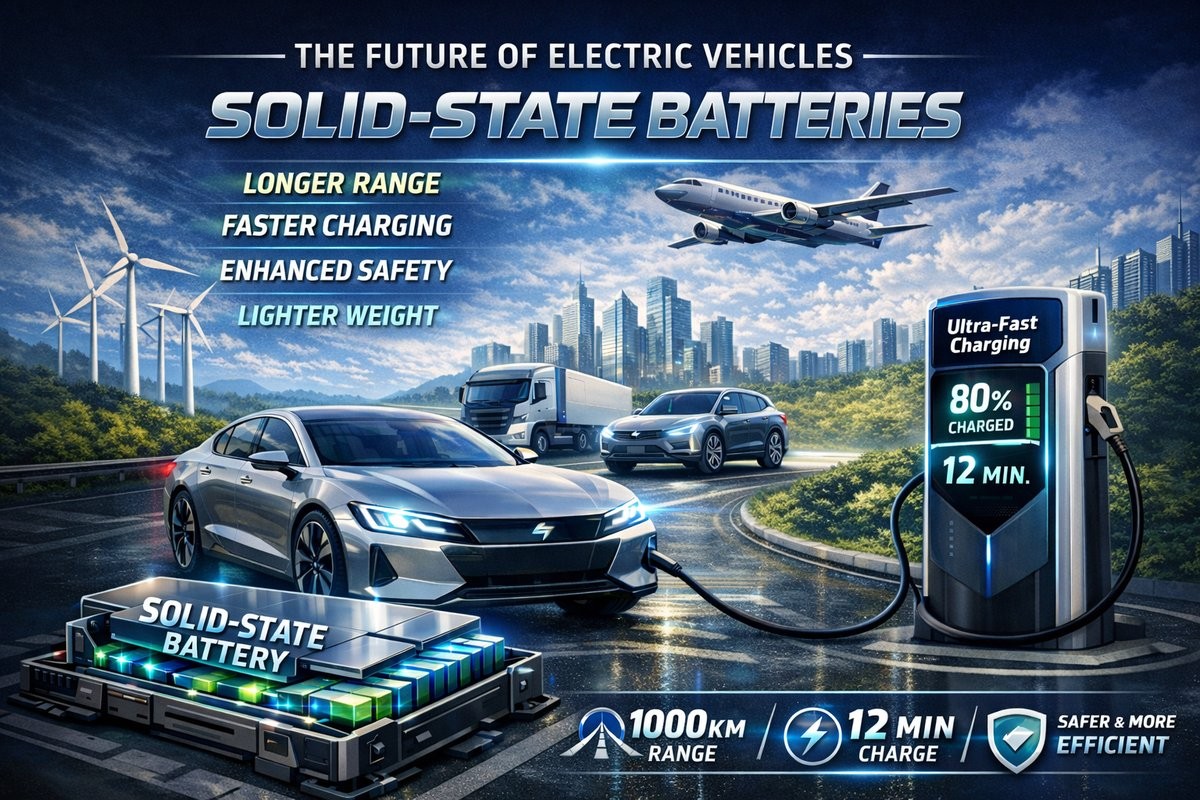
The electric vehicle industry is witnessing another major technological milestone as manufacturers accelerate research and development of solid-state batteries. These next-generation batteries are expected to replace conventional lithium-ion batteries used in most electric vehicles today. By using solid electrolytes instead of liquid electrolytes, solid-state batteries promise higher energy density, faster charging capability, and improved thermal stability.nnSeveral leading automakers have already announced plans to introduce solid-state battery powered electric vehicles within the next few years. Companies such as Toyota, Nissan, Honda, BMW, and Volkswagen are investing billions of dollars in battery research programs aimed at bringing this technology to commercial production. Industry analysts believe that the first generation of solid-state EVs could reach the market before the end of the decade, marking a significant turning point in electric vehicle performance and efficiency.nnOne of the biggest advantages of solid-state batteries is their ability to store significantly more energy compared to traditional lithium-ion battery packs. This means electric vehicles equipped with solid-state batteries could potentially achieve driving ranges of 800 to 1,000 kilometers on a single charge, depending on vehicle size and battery capacity. Such range improvements could eliminate one of the biggest concerns among potential EV buyers, which is the fear of running out of battery power during long trips.nnAnother major benefit of solid-state battery technology is enhanced safety. Traditional lithium-ion batteries rely on liquid electrolytes that can become unstable under extreme conditions, potentially leading to overheating or fire risks. Solid-state batteries use solid electrolytes, which are far more stable and resistant to thermal runaway. This makes them significantly safer for automotive applications and allows manufacturers to design more compact and efficient battery packs.nnCharging performance is also expected to improve dramatically with this new technology. Researchers believe that solid-state batteries could support ultra-fast charging systems capable of replenishing most of the battery capacity in less than fifteen minutes. Such improvements would bring electric vehicles even closer to matching the convenience of traditional petrol and diesel vehicles when it comes to refueling time.nnAutomakers are also exploring ways to reduce the overall weight of electric vehicles using solid-state battery systems. Because these batteries can store more energy in a smaller space, manufacturers can design lighter vehicles without compromising driving range. Reduced vehicle weight improves efficiency, handling, and performance, making EVs even more attractive to consumers.nnThe global push for solid-state battery development is also being supported by government initiatives and research partnerships. Several countries are funding large-scale battery innovation programs in order to secure leadership in the future EV market. Governments see battery technology as a critical strategic sector that will influence the next generation of transportation, energy storage, and industrial development.nnIn addition to passenger vehicles, solid-state batteries are also expected to play a significant role in electric trucks, buses, and aviation technologies. Commercial transportation sectors require high-capacity batteries capable of delivering long range and rapid charging, making solid-state technology particularly attractive for these applications.nnDespite the promising potential of solid-state batteries, there are still several challenges that researchers must overcome before mass production becomes viable. Manufacturing costs remain relatively high, and scaling production to meet global demand will require significant investment in new production facilities. Engineers are also working to improve the durability and lifespan of solid-state battery materials to ensure they can withstand thousands of charging cycles.nnHowever, the progress made in recent years suggests that these obstacles may soon be overcome. As battery technology continues to evolve, electric vehicles are expected to become more powerful, more efficient, and more accessible to a wider range of consumers.nnExperts believe that once solid-state batteries reach commercial production, they could trigger the next major phase of the electric vehicle revolution. With longer driving ranges, faster charging times, improved safety, and lighter vehicle designs, solid-state batteries may soon redefine what electric vehicles are capable of achieving.nnThe race to develop the next generation of EV battery technology is intensifying, and whichever manufacturers succeed in bringing solid-state batteries to market first could gain a significant competitive advantage in the rapidly growing global electric vehicle industry.