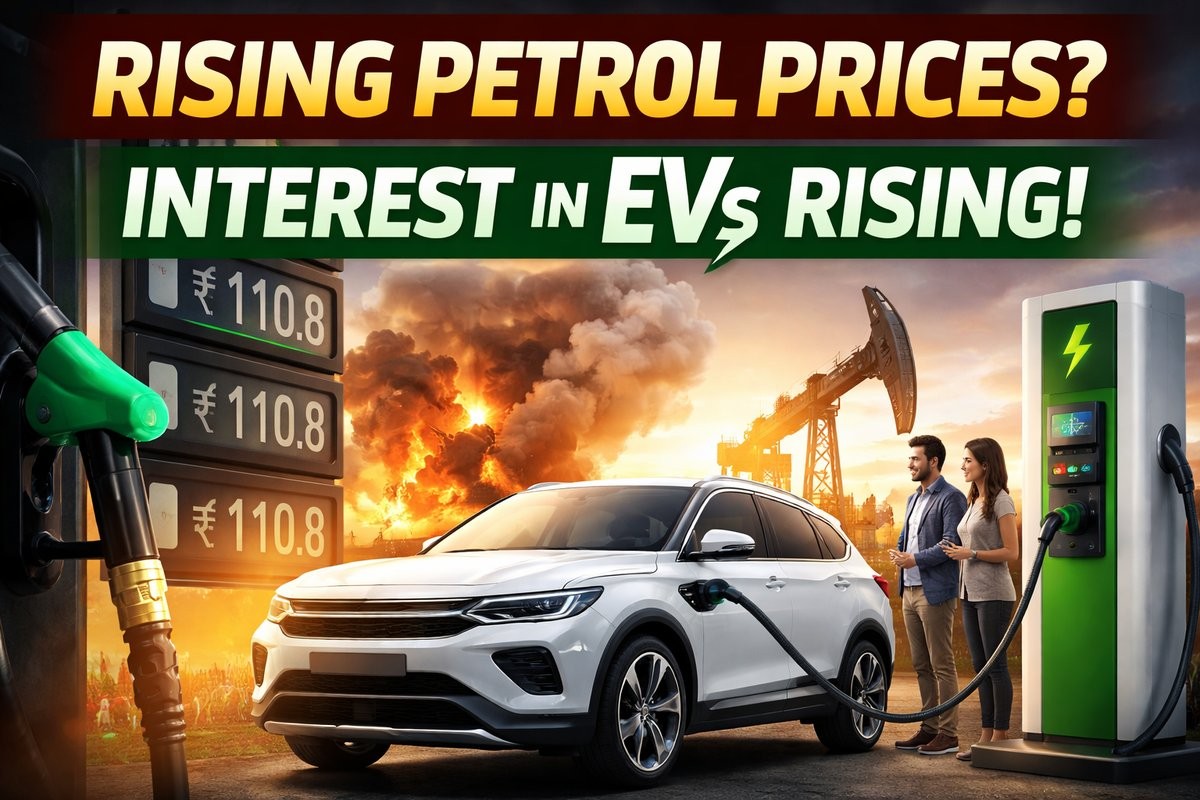
Potential increases in petrol prices due to geopolitical tensions in the Middle East are drawing renewed attention to electric vehicles as buyers begin evaluating the long-term cost of vehicle ownership. The ongoing conflict involving Israel, the United States, and Iran has heightened fears of instability in the region, which plays a crucial role in global oil production and transportation.nnOne of the most critical concerns for global energy markets is the Strait of Hormuz, a narrow but strategically important shipping route through which a large portion of the world’s crude oil supply passes. Any disruption in this corridor could significantly reduce global oil shipments, tightening supply and pushing international crude prices higher.nnFor India, such developments could have a major economic impact. The country imports a significant share of its crude oil requirements, making domestic fuel prices highly sensitive to global oil market fluctuations. Analysts estimate that every $1 increase in crude oil prices adds roughly ₹12,000 crore to India’s annual import bill, placing pressure on government finances and increasing fuel costs for consumers.nnIf geopolitical tensions persist and oil prices continue to rise, petrol and diesel prices in India could increase in the coming months. This possibility is already influencing consumer behaviour, with many potential car buyers beginning to evaluate alternatives such as electric vehicles.nnOver the past few years, EVs have gradually moved from being a niche market segment to a more widely considered option among Indian consumers. Rising petrol prices have played a significant role in this shift, as buyers increasingly look beyond the initial purchase price and focus on the total cost of ownership.nnOne of the biggest differences between petrol vehicles and EVs lies in their running costs. Petrol vehicles depend on fuel prices that fluctuate with global oil markets, taxes, and distribution costs. Electric vehicles, on the other hand, run on electricity, which generally results in much lower per-kilometre operating costs. For many urban commuters who travel predictable daily distances, charging an EV at home can lead to significant long-term savings.nnHowever, EV adoption still faces certain challenges. Electric cars usually have a higher upfront purchase price than comparable petrol vehicles, primarily due to the cost of lithium-ion batteries. Although government subsidies and incentives have helped reduce this price gap in several segments, the initial cost difference remains an important factor for many buyers.nnAnother key factor affecting EV adoption is charging infrastructure. India has expanded its public charging network significantly in recent years, particularly in major metropolitan areas. Cities such as Delhi, Mumbai, and Bengaluru have seen rapid growth in charging stations, while smaller towns and rural areas still have relatively limited coverage. For many EV owners, home charging remains the most convenient solution, especially for those with dedicated parking spaces.nnDriving range is also an important consideration for buyers comparing EVs with petrol vehicles. Most modern electric cars now offer a range of 300 to 500 kilometres per charge, which is sufficient for everyday city commuting. However, longer road trips may require careful planning around available charging stations, unlike petrol vehicles that benefit from a widespread network of fuel stations across the country.nnMaintenance costs often favour electric vehicles because they have fewer moving parts than internal combustion engines. EVs do not require engine oil changes, spark plug replacements, or complex transmission systems. This simplicity can lead to lower maintenance expenses over the vehicle’s lifetime. At the same time, buyers must consider long-term battery performance and potential replacement costs, although most manufacturers now provide extended battery warranties to address these concerns.nnEnvironmental factors are also influencing consumer interest in EVs. Electric vehicles produce zero tailpipe emissions, which can help reduce urban air pollution in densely populated cities. However, the overall environmental benefit also depends on how the electricity used to charge these vehicles is generated.nnDespite the growing interest in EVs, petrol vehicles still dominate the Indian automobile market because of their lower upfront cost and the extensive nationwide fuel station network. Nevertheless, rising fuel prices and uncertainties surrounding global oil supply are encouraging more consumers to reconsider their options.nnGeopolitical tensions involving Israel, the United States, and Iran demonstrate how international events can directly affect fuel prices around the world. Changes in global oil markets are often reflected quickly at petrol pumps, linking domestic fuel costs to developments far beyond national borders.nnAs a result, electric vehicles are increasingly becoming a practical consideration for many buyers. While EVs may not suit every driving pattern or lifestyle, their lower running costs, improving range, and expanding charging infrastructure are making them more attractive as fuel price volatility continues.nnFor consumers planning their next vehicle purchase, the decision between petrol and electric vehicles is no longer based solely on purchase price. Instead, buyers are increasingly evaluating long-term operating costs, charging accessibility, and the potential impact of global oil market developments on future fuel prices.