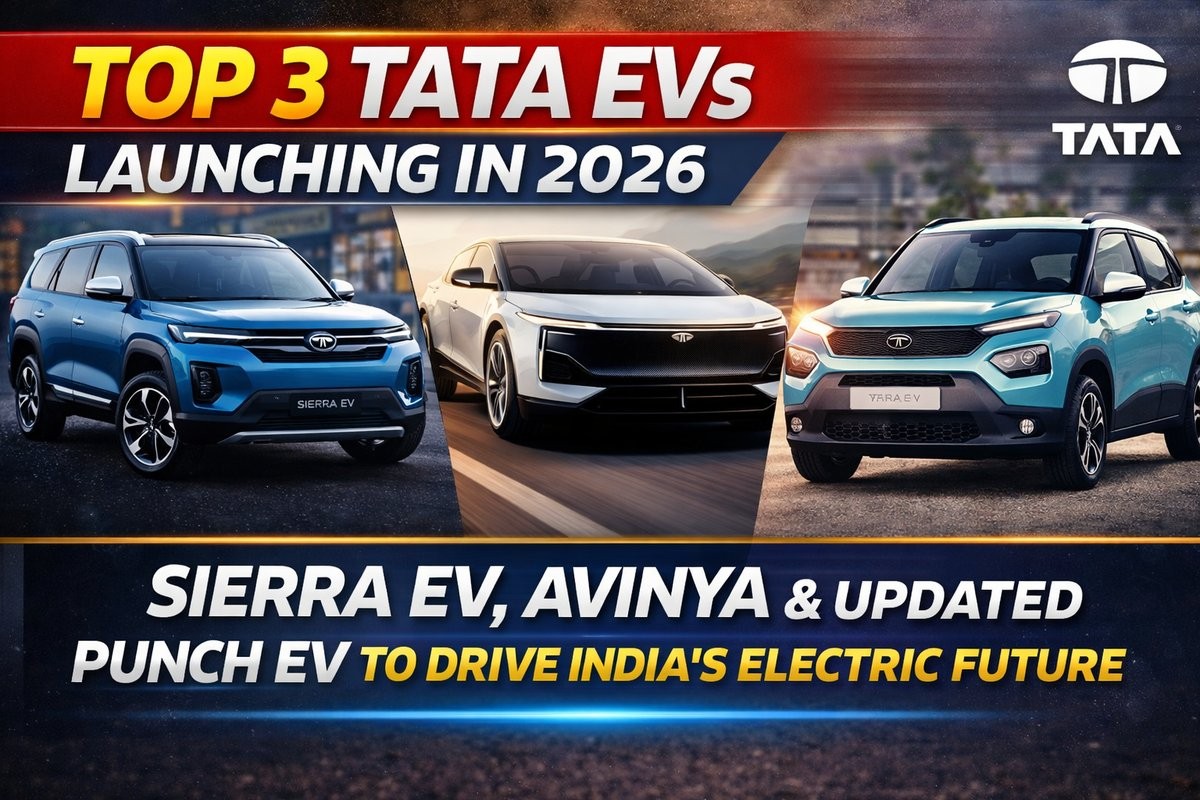
nTata Motors is preparing a major expansion of its electric vehicle lineup in India, with three key EVs set to launch in 2026. These include the much-anticipated Tata Sierra EV, the next-generation Avinya electric vehicle, and an updated version of the popular Punch EV. With these launches, Tata aims to strengthen its leadership in India’s EV market while expanding into premium, lifestyle, and mass-market segments. n
nn
nn
Tata Motors Strengthens Its EV Leadership
nn
nTata Motors has emerged as the dominant player in India’s electric passenger vehicle market over the past few years. Models such as the Nexon EV, Tiago EV, Tigor EV, and Punch EV have helped the company establish a strong foothold in both affordable and mid-range segments.n
nn
nThe company has already crossed significant milestones in EV adoption and continues to expand its product portfolio. In fact, Tata plans to introduce multiple new electric vehicles over the next few years, aiming to increase its total EV lineup significantly by the end of the decade. n
nn
nThe upcoming trio of EVs in 2026 will play a crucial role in Tata’s strategy, targeting a wider range of customers—from budget-conscious buyers to premium EV enthusiasts.n
nn
nn
1. Tata Sierra EV: The Return of an Icon
nn
nThe Tata Sierra EV is one of the most anticipated electric SUVs in India. The Sierra name carries a strong legacy, as it was one of Tata’s most iconic SUVs in the 1990s. The modern Sierra EV aims to revive that legacy with a futuristic design and advanced electric technology.n
nn
nThe production version of the Sierra EV is expected to closely resemble the internal combustion engine (ICE) version, with key differences such as a closed-off grille, aerodynamic elements, and EV-specific styling cues.n
nn
nBuilt on Tata’s advanced Acti.ev or Gen 2 platform, the Sierra EV is likely to offer both rear-wheel drive (RWD) and all-wheel drive (AWD) configurations. This will make it one of the more versatile electric SUVs in its segment.n
nn
nThe SUV is expected to feature:n
nn
- n
- Large battery pack with approximately 500 km range
- Dual-motor AWD option
- Premium interiors with lounge seating configuration
- Advanced connectivity and infotainment system
n
n
n
n
nn
nThe Sierra EV will be positioned above the Curvv EV and is expected to compete with upcoming electric SUVs from Mahindra and MG. It will primarily target buyers looking for a stylish, premium electric SUV with a strong brand legacy.n
nn
nThe launch timeline suggests that the Sierra EV could arrive in the second half of 2026, making it one of the flagship offerings in Tata’s EV lineup.n
nn
nn
2. Tata Avinya EV: Entering the Premium Electric Segment
nn
nThe Tata Avinya represents a completely new direction for Tata Motors. Unlike other models in its lineup, the Avinya will be part of a dedicated premium EV sub-brand and will be based on a next-generation “born-electric” platform.n
nn
nThis platform, often referred to as Gen 3 architecture, is designed specifically for electric vehicles rather than being adapted from petrol or diesel models. This allows for better space utilization, improved performance, and enhanced efficiency.n
nn
nThe Avinya EV is expected to offer several advanced features, including:n
nn
- n
- Long driving range of around 500 km or more
- Ultra-fast charging capability
- Spacious cabin with futuristic design
- Advanced driver assistance systems (ADAS)
- Minimalist interior with next-gen digital interface
n
n
n
n
n
nn
nThe concept version of the Avinya showcased Tata’s vision for future mobility, with a focus on sustainability, comfort, and cutting-edge technology. The production model is expected to retain many of these elements while being adapted for real-world usability.n
nn
nThe Avinya EV will be positioned above all current Tata electric vehicles and will compete with premium EVs from global brands. It is expected to launch towards the end of 2026 and will mark Tata’s entry into the high-end EV segment. :contentReferencen
nn
nThis move is significant because it shows Tata’s ambition to not only dominate the affordable EV market but also establish a presence in the premium electric space.n
nn
nn
3. Updated Tata Punch EV: Strengthening the Mass Market
nn
nWhile the Sierra EV and Avinya target higher segments, the updated Tata Punch EV will focus on strengthening Tata’s presence in the mass market.n
nn
nThe Punch EV has already been one of the most popular electric SUVs in India due to its affordability and practicality. The 2026 update is expected to bring several improvements to keep the model competitive.n
nn
nExpected updates include:n
nn
- n
- Refreshed exterior design with new styling elements
- Updated infotainment system with improved UI
- New features and connectivity options
- Improved battery efficiency and range
n
n
n
n
nn
nThe updated Punch EV will continue to be one of the most accessible electric SUVs in India. It plays a crucial role in Tata’s strategy to drive mass adoption of EVs, especially among first-time car buyers.n
nn
nReports suggest that Tata may also introduce minor improvements to the powertrain, resulting in better performance and range. n
nn
nBy updating the Punch EV, Tata ensures that it remains competitive against rivals like the Citroen eC3 and other upcoming affordable EVs.n
nn
nn
Expanding Across All EV Segments
nn
nWith the launch of these three models, Tata Motors will significantly expand its presence across multiple segments:n
nn
- n
- Entry-level segment: Punch EV and Tiago EV
- Mid-range segment: Nexon EV and Curvv EV
- Premium segment: Sierra EV
- Luxury segment: Avinya EV
n
n
n
n
nn
nThis strategy ensures that Tata has a product for every type of EV buyer, from budget-conscious customers to those seeking premium features and performance.n
nn
nThe company’s goal is to build a comprehensive EV ecosystem that includes vehicles, charging infrastructure, and connected services.n
nn
nn
Technology and Platform Advancements
nn
nA key factor behind Tata’s EV expansion is its investment in new platforms and technologies. The upcoming EVs will be based on advanced architectures that support multiple drivetrain configurations and larger battery packs.n
nn
nFor example, the Acti.ev platform allows Tata to offer both front-wheel drive and all-wheel drive setups. It also supports larger battery capacities, enabling longer driving ranges.n
nn
nMeanwhile, the Gen 3 platform used by the Avinya will be Tata’s most advanced EV architecture, designed for future mobility solutions.n
nn
nThese platforms will also support faster charging speeds, improved energy efficiency, and better safety features.n
nn
nn
Rising Competition in India’s EV Market
nn
nWhile Tata Motors currently leads the EV market in India, competition is increasing rapidly. Companies like Mahindra, MG Motor, Hyundai, and Maruti Suzuki are all preparing to launch new electric vehicles.n
nn
nMahindra, for example, is developing a new range of electric SUVs, while global manufacturers are also entering the Indian EV space.n
nn
nThis growing competition means Tata must continue to innovate and expand its lineup to maintain its leadership position.n
nn
nThe launch of the Sierra EV, Avinya, and updated Punch EV is a direct response to this competitive pressure.n
nn
nn
Government Push and EV Adoption in India
nn
nThe Indian government is actively promoting electric mobility through incentives, subsidies, and infrastructure development. The goal is to achieve a significant share of EVs in total vehicle sales by 2030.n
nn
nThis push is encouraging automakers to invest heavily in EV technology and expand their product offerings.n
nn
nTata Motors, being one of the early movers in this space, is well-positioned to benefit from these policies.n
nn
nn
Future Roadmap Beyond 2026
nn
nTata Motors is not stopping with just three EV launches in 2026. The company has plans to introduce additional electric vehicles in the coming years, further expanding its portfolio.n
nn
nBy 2030, Tata aims to have a wide range of EVs covering all major segments, including hatchbacks, sedans, SUVs, and premium vehicles.n
nn
nThe company is also investing heavily in charging infrastructure and battery technology to support this growth.n
nn
nn
nThe year 2026 is shaping up to be a landmark year for Tata Motors in the electric vehicle space. With the launch of the Sierra EV, Avinya EV, and updated Punch EV, the company is set to strengthen its dominance in India’s EV market while expanding into new segments.n
nn
nEach of these vehicles serves a specific purpose—whether it is reviving a legacy brand, entering the premium EV space, or driving mass adoption.n
nn
nTogether, they represent Tata’s comprehensive strategy to lead India’s transition to electric mobility.n
nn
nAs competition intensifies and EV adoption continues to grow, Tata’s upcoming lineup will play a crucial role in shaping the future of the Indian automotive industry.n