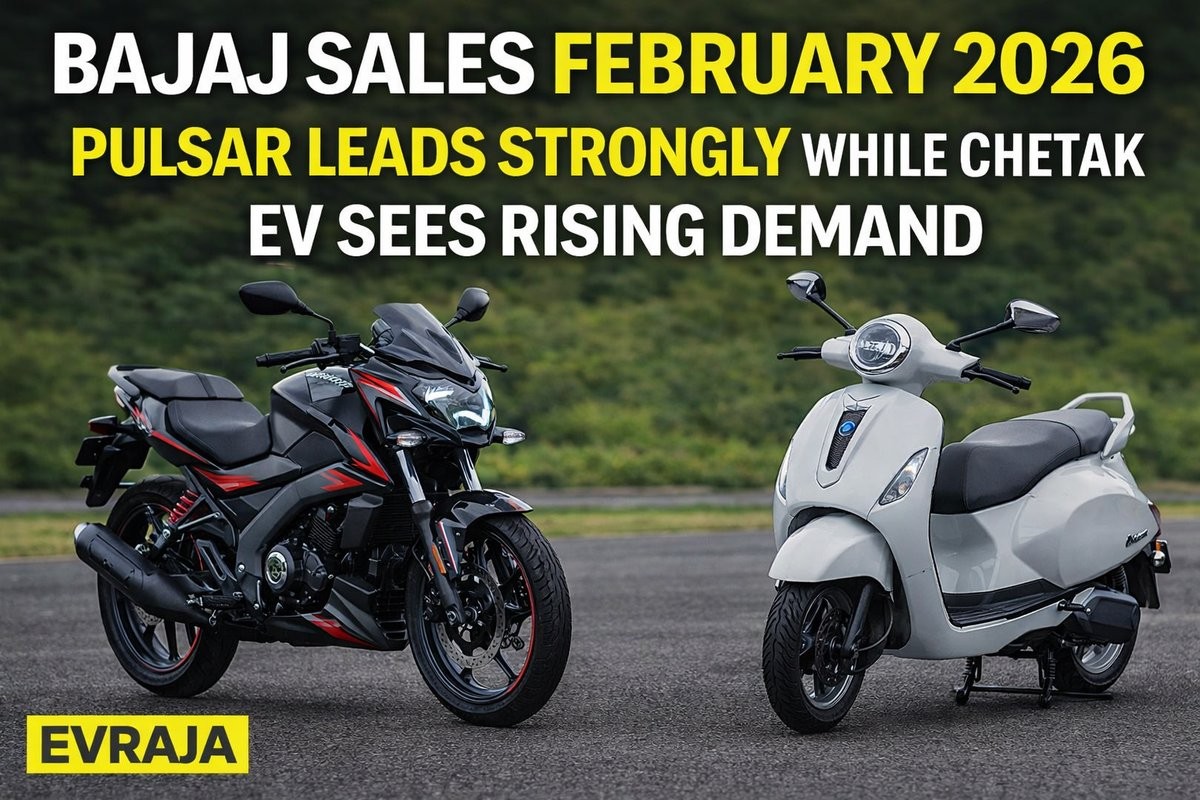
Bajaj Auto has reported a mixed yet growth-oriented performance in February 2026, with strong momentum in its Pulsar motorcycle lineup and steady growth in its electric scooter segment led by the Chetak EV. While premium motorcycles and select models recorded impressive gains, some commuter motorcycles witnessed a decline on a month-on-month basis.
nn
The February 2026 sales data highlights a clear shift in consumer preference toward performance-oriented motorcycles and electric mobility solutions. Bajaj’s ability to balance both segments has helped it maintain a strong position in India’s highly competitive two-wheeler market.
nn
Overall Performance
nn
Bajaj Auto’s February 2026 performance reflects a transitional phase in the Indian two-wheeler market. The company witnessed growth in its premium motorcycle category, particularly within the Pulsar range, while entry-level commuter bikes saw some slowdown.
nn
This trend indicates that Indian buyers are increasingly shifting toward higher-capacity motorcycles and feature-rich products, while also exploring electric alternatives for daily commuting.
nn
The company’s strategy of strengthening both internal combustion engine (ICE) products and electric vehicles (EVs) appears to be paying off, as seen in the steady performance of the Chetak electric scooter.
nn
Pulsar Range Continues to Lead Bajaj’s Portfolio
nn
The Pulsar lineup remains the backbone of Bajaj Auto’s motorcycle business. Known for its sporty performance and wide appeal, the Pulsar series continues to dominate sales charts across multiple segments.
nn
The Pulsar 125 emerged as the highest-selling model in February 2026, with sales reaching 58,056 units. Despite a slight month-on-month decline of 13%, the model recorded a healthy year-on-year growth of 8%.
nn
The continued dominance of the Pulsar 125 highlights its strong positioning as an affordable yet stylish motorcycle for young riders and urban commuters.
nn
Meanwhile, the Pulsar NS (160/200) series delivered one of the most impressive performances of the month. The NS range recorded sales of 31,435 units, nearly doubling its performance with a remarkable 97% year-on-year growth.
nn
This surge in demand for the NS series reflects the growing popularity of performance-oriented motorcycles in the mid-segment. Riders are increasingly seeking bikes that offer a combination of power, design, and modern features.
nn
Premium Motorcycle Segment Gains Strength
nn
Bajaj’s premium motorcycle segment has shown significant improvement, driven largely by the success of the Pulsar NS lineup and other higher-capacity models.
nn
The rising demand for premium motorcycles indicates a shift in consumer mindset, where buyers are willing to spend more for better performance, advanced technology, and enhanced riding experience.
nn
This trend is also supported by improving economic conditions and increasing disposable income among young buyers, especially in urban areas.
nn
The growth in this segment is crucial for Bajaj, as premium motorcycles typically offer higher margins compared to entry-level commuter bikes.
nn
Chetak Electric Scooter Gains Momentum
nn
One of the most notable highlights of Bajaj’s February 2026 performance is the steady growth of its electric scooter, the Chetak EV.
nn
The Chetak recorded sales of 28,004 units during the month, reflecting a strong year-on-year growth of 32%. Although there was a marginal month-on-month decline of 1%, the overall performance remains positive.
nn
The consistent growth of the Chetak EV underscores the increasing acceptance of electric vehicles in India. Consumers are gradually shifting toward eco-friendly mobility solutions, driven by rising fuel prices and government incentives.
nn
Bajaj’s early entry into the electric scooter segment with the Chetak has given it a competitive advantage, allowing the company to establish a strong presence in the EV market.
nn
Shift Towards Electric Mobility
nn
The performance of the Chetak EV is a clear indicator of the changing dynamics in the Indian two-wheeler industry. Electric scooters are gaining popularity not only in metro cities but also in tier-2 and tier-3 markets.
nn
This shift is being driven by several factors:
nn
- n
- Increasing fuel costs
- Government incentives and subsidies
- Improved charging infrastructure
- Growing environmental awareness
n
n
n
n
nn
Bajaj’s focus on expanding its EV portfolio is aligned with these trends, positioning the company for long-term growth in the electric mobility space.
nn
Challenges in the Commuter Segment
nn
While Bajaj has seen strong performance in its premium and electric segments, the commuter motorcycle category faced some challenges in February 2026.
nn
Several entry-level models recorded month-on-month declines, reflecting a slowdown in demand within this segment.
nn
This could be attributed to:
nn
- n
- Market saturation in the entry-level category
- Shift in consumer preference toward premium bikes
- Increased competition from rival brands
n
n
n
nn
Despite these challenges, the commuter segment continues to contribute significantly to overall sales volumes, making it an important area for Bajaj to focus on.
nn
Changing Consumer Preferences
nn
The February 2026 sales data highlights a clear shift in consumer behavior. Buyers are increasingly prioritizing:
nn
- n
- Performance and power
- Modern features and technology
- Stylish design
- Eco-friendly options
n
n
n
n
nn
This shift is reshaping the Indian two-wheeler market, pushing manufacturers to innovate and diversify their product offerings.
nn
Bajaj’s strong performance in the Pulsar and Chetak segments reflects its ability to adapt to these changing preferences.
nn
Strategic Importance of the Pulsar Brand
nn
The Pulsar brand has been a cornerstone of Bajaj Auto’s success for over two decades. Known for introducing performance biking to the Indian market, Pulsar continues to be a key driver of sales and brand value.
nn
The wide range of models within the Pulsar lineup allows Bajaj to cater to different customer segments, from entry-level riders to performance enthusiasts.
nn
The success of the Pulsar NS series further strengthens Bajaj’s position in the mid-segment motorcycle category.
nn
Market Competition and Industry Trends
nn
The Indian two-wheeler market is highly competitive, with major players like Hero MotoCorp, Honda, TVS, and Yamaha competing across various segments.
nn
In this competitive landscape, Bajaj’s ability to maintain strong sales in both ICE and EV segments is noteworthy.
nn
The industry is also witnessing rapid changes, including:
nn
- n
- Growth of electric vehicles
- Increasing demand for premium motorcycles
- Technological advancements
n
n
n
nn
Bajaj’s strategy of balancing traditional and electric mobility solutions positions it well to navigate these changes.
nnn
Looking ahead, Bajaj Auto is expected to continue focusing on expanding its premium motorcycle lineup and strengthening its presence in the electric vehicle segment.
nn
The company is likely to introduce new models and updates to keep up with evolving market demands.
nn
The growth of the Chetak EV indicates strong potential for Bajaj in the electric mobility space, while the continued success of the Pulsar lineup ensures stability in the motorcycle segment.
nnn
Bajaj Auto’s February 2026 sales performance highlights a balanced growth strategy driven by strong demand for Pulsar motorcycles and increasing adoption of the Chetak electric scooter.
nn
While challenges remain in the commuter segment, the company’s focus on premium motorcycles and electric mobility positions it well for future growth.
nn
The dominance of the Pulsar lineup and the rising popularity of the Chetak EV reflect broader trends in the Indian two-wheeler market, where consumers are increasingly seeking performance, technology, and sustainability.
nn
As the industry continues to evolve, Bajaj Auto remains a key player, adapting to changing market dynamics and setting the stage for the next phase of growth.