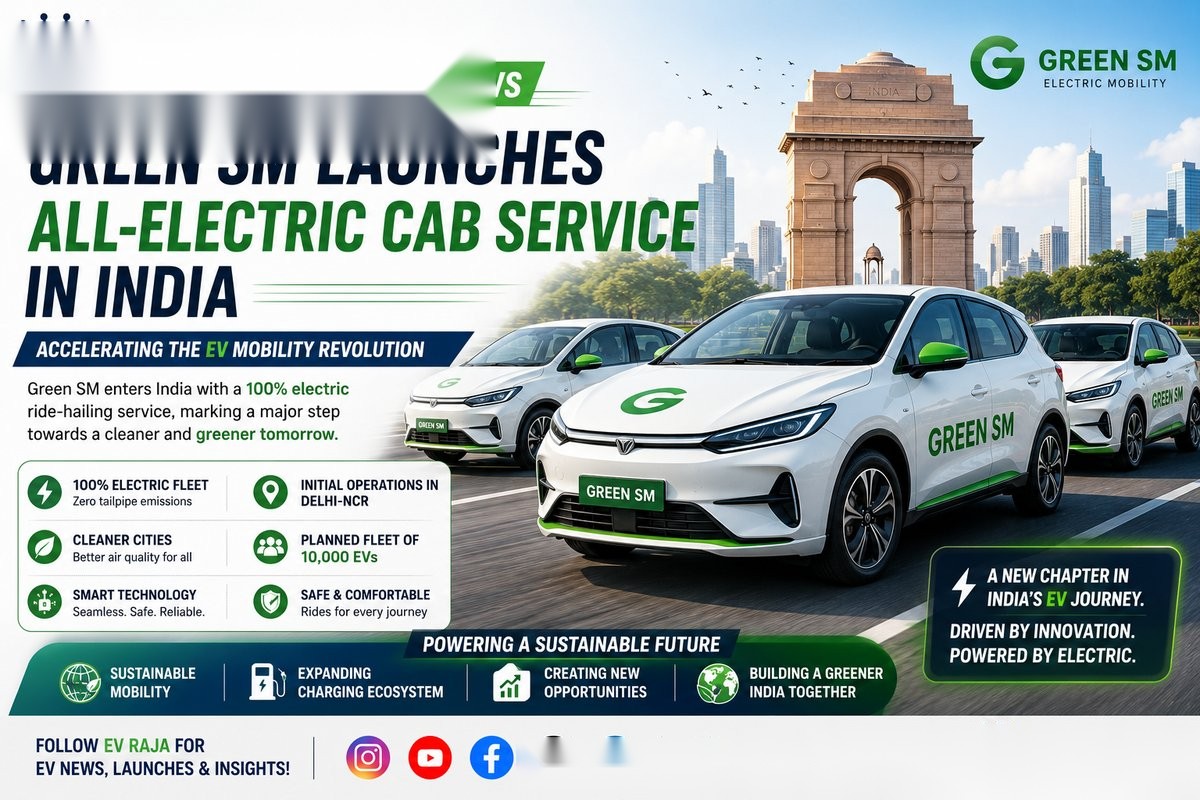
India’s electric mobility sector continues to witness rapid growth as new players enter the market with innovative business models and large-scale investments. One of the latest developments comes from Green SM, a company focused entirely on electric transportation solutions. The launch of its all-electric ride-hailing platform marks an important milestone in India’s transition toward cleaner and more sustainable mobility.
nn
The arrival of a dedicated electric cab service demonstrates how the Indian transportation landscape is evolving beyond privately owned electric vehicles. Electric mobility is increasingly becoming a mainstream solution for public transportation, fleet operations, and urban commuting. This shift is expected to contribute significantly to reducing emissions, improving air quality, and accelerating the adoption of electric vehicles across the country.
nn
As cities continue to face challenges related to traffic congestion, fuel costs, and environmental concerns, electric mobility solutions are emerging as a practical alternative. The launch of Green SM represents another step toward building a future where sustainable transportation becomes an integral part of everyday life.
nn
A New Era for Ride-Hailing Services
nn
The ride-hailing industry has transformed urban transportation over the last decade. Consumers now expect convenient, affordable, and technology-driven transportation options that can be accessed through smartphones and digital platforms.
nn
Traditionally, ride-hailing fleets have been dominated by internal combustion engine vehicles. While these services improved convenience, they also contributed to fuel consumption and urban emissions.
nn
The introduction of a fully electric ride-hailing platform offers a different approach. By operating an all-electric fleet, Green SM aims to reduce environmental impact while delivering a modern transportation experience.
nn
This development highlights the growing confidence in electric mobility and demonstrates how EV technology is becoming suitable for large-scale commercial applications.
nn
The Growing Importance of Fleet Electrification
nn
Fleet electrification has become one of the most important trends within the global transportation industry.
nn
Commercial fleets typically cover significantly more distance than private vehicles. As a result, transitioning these fleets to electric power can generate substantial environmental benefits.
nn
Electric fleet operations offer several advantages:
nn
- n
- Reduced fuel costs
- Lower maintenance requirements
- Decreased carbon emissions
- Improved air quality
- Enhanced energy efficiency
- Quieter urban transportation
n
n
n
n
n
n
nn
By focusing on fleet electrification, transportation companies can accelerate the transition toward sustainable mobility while achieving long-term operational savings.
nn
Why Electric Ride-Hailing Matters
nn
Electric ride-hailing services have the potential to influence consumer behavior on a large scale.
nn
Many people have never experienced driving or riding in an electric vehicle. Dedicated electric taxi services provide consumers with direct exposure to EV technology.
nn
Passengers can experience:
nn
- n
- Smooth acceleration
- Silent operation
- Modern technology features
- Enhanced ride comfort
- Environmentally friendly transportation
n
n
n
n
n
nn
This exposure can help increase consumer confidence and encourage future EV purchases.
nn
In many cases, a positive experience with an electric taxi can become a customer’s first introduction to electric mobility.
nn
Supporting India’s Sustainability Goals
nn
India has established ambitious sustainability objectives aimed at reducing emissions and promoting cleaner transportation solutions.
nn
The transportation sector plays a significant role in energy consumption and urban pollution.
nn
Electric vehicles contribute to sustainability by:
nn
- n
- Reducing tailpipe emissions
- Improving urban air quality
- Decreasing dependence on fossil fuels
- Supporting renewable energy integration
- Enhancing energy security
n
n
n
n
n
nn
The expansion of electric transportation services supports national efforts to build a cleaner and more sustainable future.
nn
Technology Driving Modern Mobility
nn
Modern ride-hailing services rely heavily on digital technologies to deliver seamless user experiences.
nn
Electric mobility platforms are combining transportation and technology in innovative ways.
nn
Advanced features commonly found in modern mobility ecosystems include:
nn
- n
- Real-time vehicle tracking
- Mobile app integration
- Digital payments
- Intelligent route optimization
- Predictive maintenance systems
- Connected vehicle technology
n
n
n
n
n
n
nn
These technologies improve operational efficiency while enhancing customer satisfaction.
nn
The future of mobility increasingly depends on the integration of transportation and digital innovation.
nn
Economic Benefits of EV Fleets
nn
Beyond environmental advantages, electric vehicle fleets also offer compelling economic benefits.
nn
Fleet operators continuously evaluate operating costs, maintenance expenses, and long-term profitability.
nn
Electric vehicles can provide:
nn
- n
- Lower energy costs per kilometer
- Reduced maintenance requirements
- Fewer moving mechanical components
- Longer operational efficiency
- Improved fleet utilization
n
n
n
n
n
nn
As battery technology improves and charging infrastructure expands, the business case for fleet electrification continues to strengthen.
nn
The Role of Charging Infrastructure
nn
Charging infrastructure remains one of the most critical components of the electric mobility ecosystem.
nn
Large-scale EV fleet operations require reliable and accessible charging solutions.
nn
Key infrastructure requirements include:
nn
- n
- Fast charging stations
- Fleet charging hubs
- Smart energy management systems
- Grid integration technologies
- Scalable charging networks
n
n
n
n
n
nn
The growth of commercial EV services is expected to drive further investment in charging infrastructure across India.
nn
Improved charging availability will benefit both commercial operators and private EV owners.
nn
Consumer Adoption Continues to Rise
nn
Consumer interest in electric mobility has increased significantly over the last few years.
nn
Several factors are contributing to this trend:
nn
- n
- Increasing fuel prices
- Growing environmental awareness
- Improved EV performance
- Greater model availability
- Government support initiatives
- Expansion of charging infrastructure
n
n
n
n
n
n
nn
As consumers become more familiar with EV technology, adoption rates are expected to continue rising.
nn
Commercial transportation services can play a key role in accelerating this process.
nn
Urban Mobility Transformation
nn
Cities around the world are rethinking transportation systems to address challenges such as congestion, pollution, and sustainability.
nn
Electric ride-hailing services align with broader urban mobility objectives by providing cleaner transportation alternatives.
nn
Benefits for cities include:
nn
- n
- Reduced vehicle emissions
- Lower noise pollution
- Improved air quality
- Support for climate goals
- Enhanced public health outcomes
n
n
n
n
n
nn
These benefits make electric transportation an important component of future smart city initiatives.
nn
Competition and Innovation
nn
The entry of new players into the mobility sector often stimulates competition and innovation.
nn
Increased competition encourages companies to improve:
nn
- n
- Service quality
- Technology offerings
- Customer experiences
- Operational efficiency
- Sustainability initiatives
n
n
n
n
n
nn
Consumers ultimately benefit from greater choice and improved services.
nn
The electric mobility sector is likely to witness continued innovation as companies compete to deliver better transportation solutions.
nn
Impact on the EV Ecosystem
nn
Large-scale electric transportation projects have ripple effects throughout the EV ecosystem.
nn
Growth in fleet operations supports demand for:
nn
- n
- Electric vehicles
- Battery manufacturing
- Charging equipment
- Software platforms
- Energy management systems
- Maintenance services
n
n
n
n
n
n
nn
This creates opportunities for businesses across multiple industries while strengthening the overall EV value chain.
nn
Future Opportunities
nn
The future of electric mobility extends beyond ride-hailing services.
nn
Emerging opportunities include:
nn
- n
- Electric logistics fleets
- Autonomous mobility services
- Smart transportation platforms
- Vehicle-to-grid technologies
- Renewable energy integration
- Connected mobility ecosystems
n
n
n
n
n
n
nn
These innovations have the potential to transform transportation in ways that were previously unimaginable.
nn
The Road Ahead
nn
India’s electric mobility journey is still in its early stages, but momentum continues to build.
nn
Government initiatives, private sector investment, technological advancements, and growing consumer awareness are creating favorable conditions for EV adoption.
nn
Electric ride-hailing services represent one important component of this broader transformation.
nn
As infrastructure expands and technology continues to improve, electric transportation is expected to become increasingly accessible and practical for millions of consumers.
nn
Conclusion
nn
The launch of Green SM’s electric ride-hailing service reflects the growing maturity of India’s EV ecosystem and highlights the increasing role of electric mobility in everyday transportation.
nn
By focusing on sustainability, technology, and customer experience, the company is contributing to a broader shift toward cleaner and more efficient transportation solutions.
nn
As India’s electric mobility revolution continues to gain momentum, initiatives like this demonstrate that the future of transportation is not only electric but also smarter, cleaner, and more connected.
nn
The coming years will likely bring further innovation, investment, and adoption, positioning electric mobility as a central pillar of India’s transportation future.