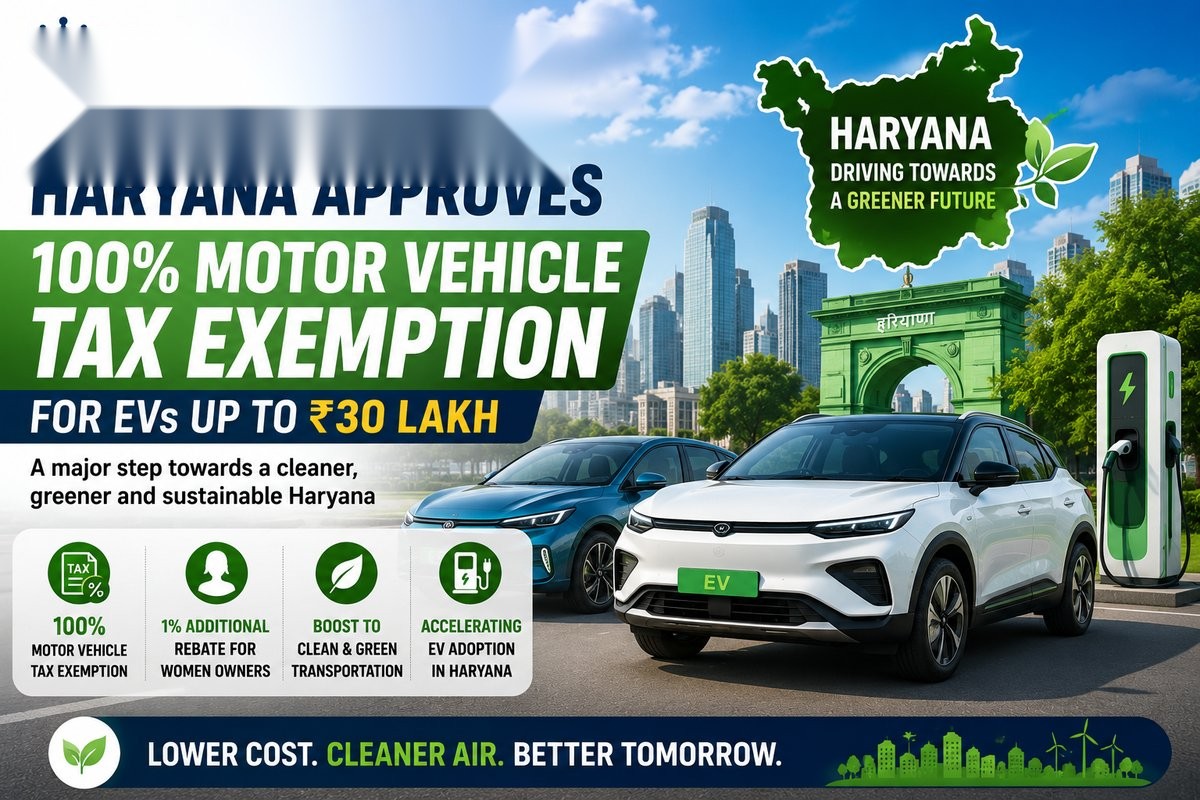
Summary: In a major push for electric mobility, the Haryana Cabinet has approved a 100% exemption from motor vehicle tax for new electric vehicles priced up to ₹30 lakh. The decision is expected to reduce the overall cost of EV ownership, encourage cleaner transportation, and strengthen the state’s electric vehicle ecosystem. The policy also includes additional incentives for women vehicle owners, making Haryana one of the latest states to introduce strong measures to accelerate EV adoption. :contentReference[oaicite:0]{index=0}
Haryana Strengthens Its EV Vision
Haryana has announced one of its biggest incentives for electric vehicle buyers by approving a complete exemption from motor vehicle tax on eligible electric vehicles costing up to ₹30 lakh (ex-showroom). The decision was approved during a Cabinet meeting led by Chief Minister Nayab Singh Saini and is aimed at promoting sustainable transportation while reducing dependence on conventional fuel-powered vehicles. :contentReference[oaicite:1]{index=1}
Key Highlights of the Decision
- 100% exemption on motor vehicle tax for electric vehicles priced up to ₹30 lakh.
- Applicable to newly registered battery electric vehicles.
- Additional 1% rebate in motor vehicle tax for eligible non-transport vehicles registered in the name of women.
- Supports Haryana’s clean mobility and pollution reduction goals.
Lower Ownership Costs for EV Buyers
Vehicle registration taxes contribute significantly to the overall purchase cost of a new vehicle. By removing this expense, Haryana aims to make electric vehicles more affordable for private buyers and businesses considering the transition to zero-emission mobility.
The move is expected to improve EV adoption across passenger cars, electric SUVs, and other eligible battery-powered vehicles within the price bracket.
Encouraging Sustainable Transportation
With increasing concerns over urban air pollution and carbon emissions, state governments across India are introducing policies that encourage cleaner transportation. Haryana’s latest decision aligns with India’s broader vision of increasing electric vehicle adoption while supporting the country’s long-term sustainability goals.
Reducing the cost of ownership can encourage more consumers to switch from petrol and diesel vehicles to electric alternatives, especially in rapidly growing urban regions.
Boost for the EV Industry
The tax exemption is expected to benefit not only consumers but also vehicle manufacturers, dealerships, charging infrastructure providers and companies operating in the electric mobility ecosystem.
As demand grows, manufacturers may expand their product portfolios while investors continue strengthening charging infrastructure across the state.
Growing Competition Among States
Several Indian states are actively introducing EV-friendly policies through subsidies, tax exemptions and charging infrastructure development. Haryana’s latest announcement reinforces this nationwide momentum and reflects increasing competition among states to become leaders in electric mobility.
What It Means for Consumers
Prospective EV buyers in Haryana could see meaningful savings on the total purchase cost thanks to the motor vehicle tax exemption. Combined with improving charging infrastructure and a wider range of electric vehicles entering the market, the new incentive is expected to make EV ownership more attractive than ever.
With supportive government policies, expanding charging networks and continuous technological advancements, India’s electric vehicle ecosystem continues to move toward mainstream adoption.