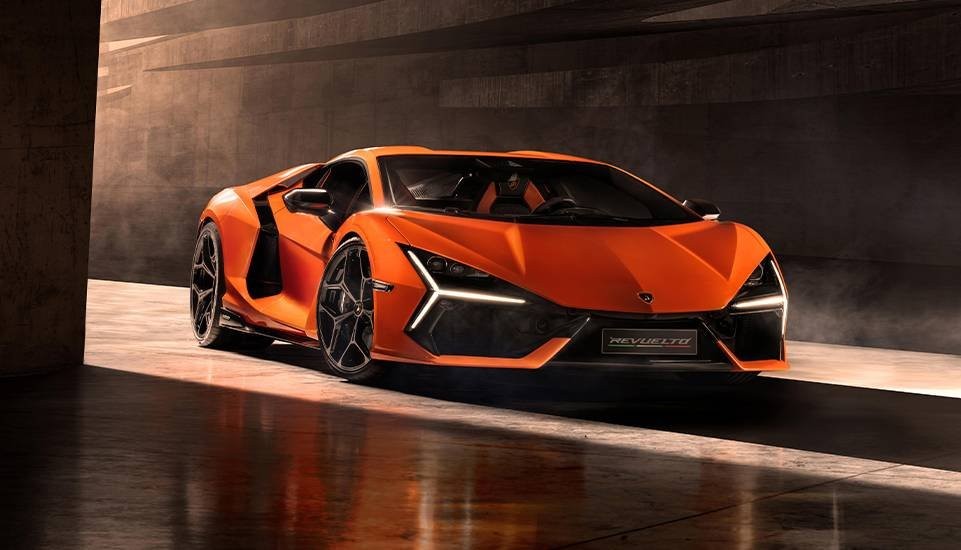
Italian luxury carmaker Lamborghini has officially abandoned plans to introduce a fully electric production vehicle, marking a significant shift in its electrification strategy. The company confirmed that its 2023 Lanzador electric concept will not move forward to production, as customer appetite for fully battery-powered supercars remains weak.rnrnChief executive Stephan Winkelmann explained that the “acceptance curve” for EVs among Lamborghini’s customers is close to zero. He warned that aggressively investing in full-electric development under current market conditions could become “an expensive hobby” and financially irresponsible.rnrnInstead, Lamborghini will concentrate on plug-in hybrid technology. By 2030, the brand’s entire model lineup will consist of plug-in hybrids rather than fully electric vehicles. The company also indicated it will continue producing combustion-engine cars for as long as regulations and market conditions allow.rnrnLamborghini, owned by Volkswagen through its subsidiary Audi, delivered a record 10,747 cars globally in 2025. The company credited its strong performance to the success of its hybridisation strategy, which has been well received across Europe, the Americas, and Asia Pacific.rnrnSales have been boosted by models such as the Revuelto hybrid supercar, priced from around **£450,000**, the plug-in hybrid Urus SUV starting at approximately **£210,000**, and the hybrid Temerario introduced last year. Hybrid options are now available across Lamborghini’s entire range.rnrnWinkelmann noted that sports car enthusiasts have struggled to form an emotional connection with fully electric models, particularly due to the absence of the distinctive engine sound associated with high-performance combustion vehicles. He emphasized that plug-in hybrids deliver “the best of both worlds,” combining electric torque and efficiency with the emotional appeal and power output of traditional engines.rnrnThe decision highlights growing uncertainty in the luxury EV segment and suggests that, at least for ultra-high-performance brands, hybrid technology may remain the preferred path forward in the near term.