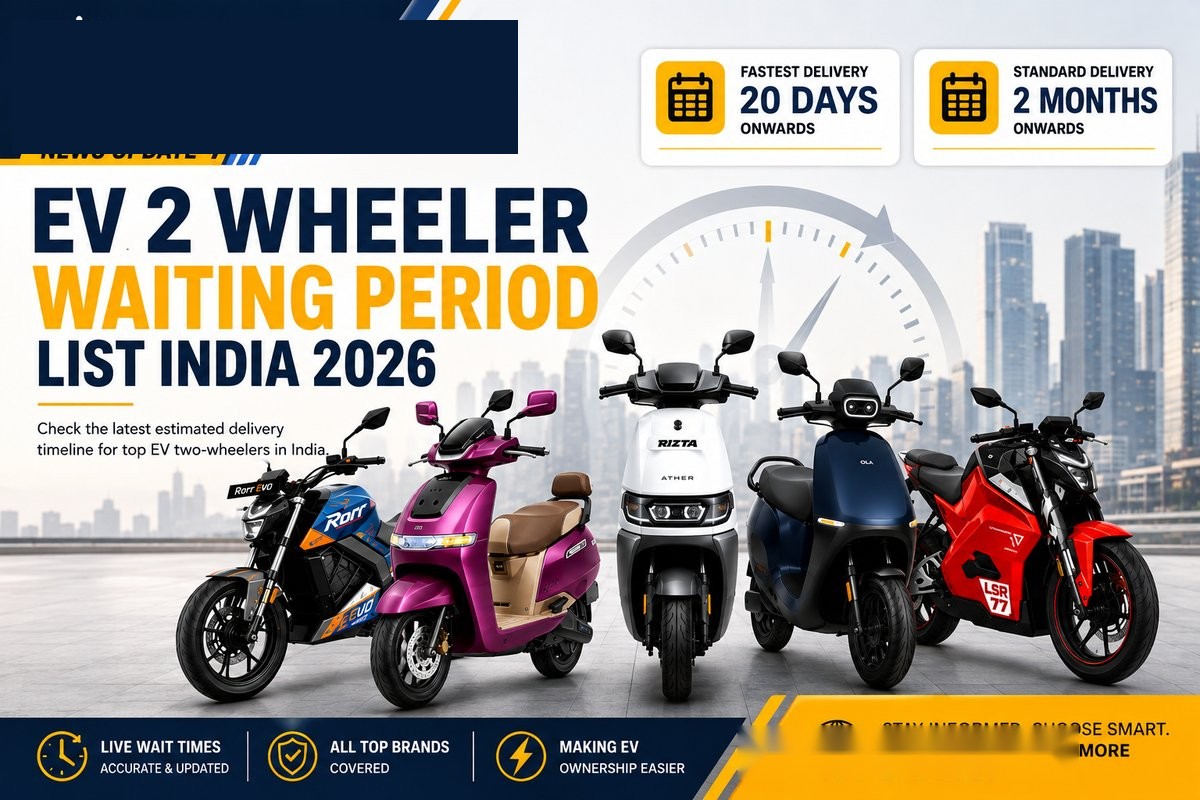
India’s electric two-wheeler market crossed 1 million units sold by early July 2026 — a 54% jump over last year. That record demand is now showing up in a very practical place: how long buyers wait between booking and delivery.
Why Waiting Periods Are Back in the Conversation
For most of 2025, electric two-wheeler buyers in India enjoyed near-immediate delivery on popular models as manufacturers ramped up capacity faster than demand. That balance has shifted in 2026. A record 10,05,279 e-scooters, motorcycles and mopeds were sold between January 1 and July 6, 2026, and that pace works out to roughly 5,375 units sold every single day. This is also a supply-side story: record demand is stretching waiting periods on popular variants in some cities, particularly as buyers rushed to lock in incentives before scheme deadlines.
Two forces converged to create this squeeze. First, a sharp rise in petrol prices in May 2026 pushed a wave of commuters toward EVs to cut running costs. Second, the PM E-DRIVE central subsidy scheme for two- and three-wheelers was fund-limited and scheduled to close around July 31, 2026, prompting a rush of last-minute bookings to lock in benefits before they lapsed.
Top 10 Electric Scooters & Bikes: Current Availability Snapshot
Based on current market standing, dealer network scale, and sales volumes, here are the ten models Indian buyers are most actively shortlisting and booking in 2026, along with what’s known about their delivery situation.
1. TVS iQube (incl. iQube S / iQube ST) Widely Available
TVS has settled into the No. 1 slot in the segment, with the iQube family delivering around 47,000 registrations in a single recent month. With that scale of production and one of the widest dealer networks of any EV brand in India, availability is generally strong, though the higher-range iQube ST and specific colours can see short local waits during peak-demand periods.
2. Bajaj Chetak (3001 / 3501 Series) Widely Available
Bajaj is close behind TVS at roughly 43,000 monthly registrations, riding the Chetak’s wide dealer reach. Between TVS and Bajaj, the two legacy rivals hold nearly half the entire EV two-wheeler market — a scale that generally keeps deliveries fast, though the brand has a history of pausing online bookings during demand surges on specific variants.
3. Ather Rizta Moderate, City-Dependent
Ather Energy is the standout among new-age players, with around 31,000 monthly registrations and 17% year-to-date market share, now firmly in third place. The Rizta now makes up nearly 60% of Ather’s total sales, and the company has been expanding its retail footprint toward 700 centres nationwide by the end of FY2026 specifically to keep pace with demand — a strong signal that supply has been under pressure in some regions.
4. Hero Vida VX2 Widely Available
Hero MotoCorp’s Vida brand crossed the 1-lakh unit mark for the year by early July 2026. Backed by Hero’s existing dealer and service infrastructure across India, the VX2 — including its Battery-as-a-Service pricing option — generally sees quicker turnaround than newer, capacity-constrained challengers.
5. Ola S1 X / S1 Pro (Gen 3) Variable
Ola repositioned its lineup around the Gen 3 platform in 2026, with the sub-₹1 lakh S1 X and the flagship S1 Pro. While Ola’s online-first booking model has historically enabled fast turnaround on paper, the brand has faced well-documented service and reliability concerns in the past year that have affected buyer confidence more than pure delivery timelines.
6. Ather 450X Moderate
Ather’s performance-focused flagship continues to sell alongside the Rizta but in smaller volumes. As a lower-volume, feature-rich model, it can see longer local waits than the mass-market Rizta, particularly on top-spec variants and select colours.
7. TVS Orbiter New, Ramping Up
TVS’s newer entrant in the value segment is being scaled through the same production and dealer infrastructure that supports the iQube family, which should help it avoid the long waits sometimes seen with all-new nameplates from smaller brands.
8. Honda Activa e: Moderate
Honda’s first electric scooter in India carries the brand’s massive service trust, but as a relatively recent entrant into the EV space, initial production ramp-up means city-level availability can still vary more than for established EV-first brands.
9. River Indie Limited / Niche
As a smaller, utility-focused challenger brand with a narrower dealer footprint than the legacy OEMs, the Indie generally has a tighter supply chain, and buyers outside its core cities should expect to check availability carefully before booking.
10. Ultraviolette Tesseract Long Wait / Pre-Booking Stage
Bookings for the Tesseract are open at a token amount of ₹999, with deliveries confirmed to begin only in Q2 2026 — later than the brand’s original early-2026 target. As a new-platform launch from a smaller EV-focused manufacturer, this is currently the longest, most clearly defined wait among the top 10, with some trackers reporting the timeline has slipped further toward early 2027 for later booking cohorts.
What’s Actually Driving the Wait
| Factor | Effect on Waiting Periods |
|---|---|
| PM E-DRIVE subsidy deadline | Central two-wheeler subsidies under PM E-DRIVE were set to close by March 31, 2026, with the window later extended to July 31, 2026, triggering a rush of bookings before expiry. |
| Petrol price hikes | Oil marketing companies raised petrol prices four times in 10 days from mid-May 2026, pushing a fresh wave of commuters to switch to EVs almost overnight. |
| Record overall demand | Electric two-wheeler sales rose 68% month-on-month in March 2026 alone, straining production and logistics even at scaled-up manufacturers. |
| Dealer network expansion (lagging demand) | Brands like Ather are actively growing store count specifically to reduce regional stock shortages, implying current gaps in some cities. |
| New-platform launches | All-new models (Tesseract, Ather EL01, upcoming Simple Wave, Ather Konarc) typically carry the longest waits during their first delivery cycles, as seen historically with the original Ola S1 and Simple One launches. |
What This Means If You’re Buying Now
With the PM E-DRIVE two-wheeler subsidy window having closed (or nearing closure) around July 31, 2026, buyers weighing a purchase should factor in two competing pressures: the shrinking window for federal incentives versus the risk of a rushed purchase during a high-demand period when stock is tightest. As one industry analysis put it, losing roughly ₹5,000 in incentive value on a vehicle you’ll own for six to eight years matters far less than ending up with the wrong scooter because of a rushed decision.
Quick Summary
- No official, unified waiting-period data exists for these models in 2026 — figures vary by city, dealer stock, variant and colour, and manufacturers direct buyers to check locally rather than publishing fixed timelines.
- Demand has spiked sharply: EV two-wheeler sales crossed 1 million units by July 6, 2026, up 54% year-on-year, driven by rising petrol prices and a subsidy deadline rush.
- Mainstream models are the safest bet for quick delivery: TVS iQube, Bajaj Chetak, Hero Vida VX2 and Ather Rizta benefit from large-scale production and wide dealer networks, keeping typical waits short to moderate.
- Niche and all-new-platform models carry the longest waits: the Ultraviolette Tesseract, still in its pre-booking/early-delivery phase, is the clearest example — its deliveries slipped from early-2026 targets into Q2 2026 and beyond.
- Supply is actively catching up: Ather’s push toward 700 retail centres by the end of FY2026 shows manufacturers are aware of regional stock gaps and are investing to close them.
- Actionable advice: Always confirm the current waiting period with your specific city’s dealership before booking — national trends are a useful backdrop, but local stock is what actually determines your delivery date.