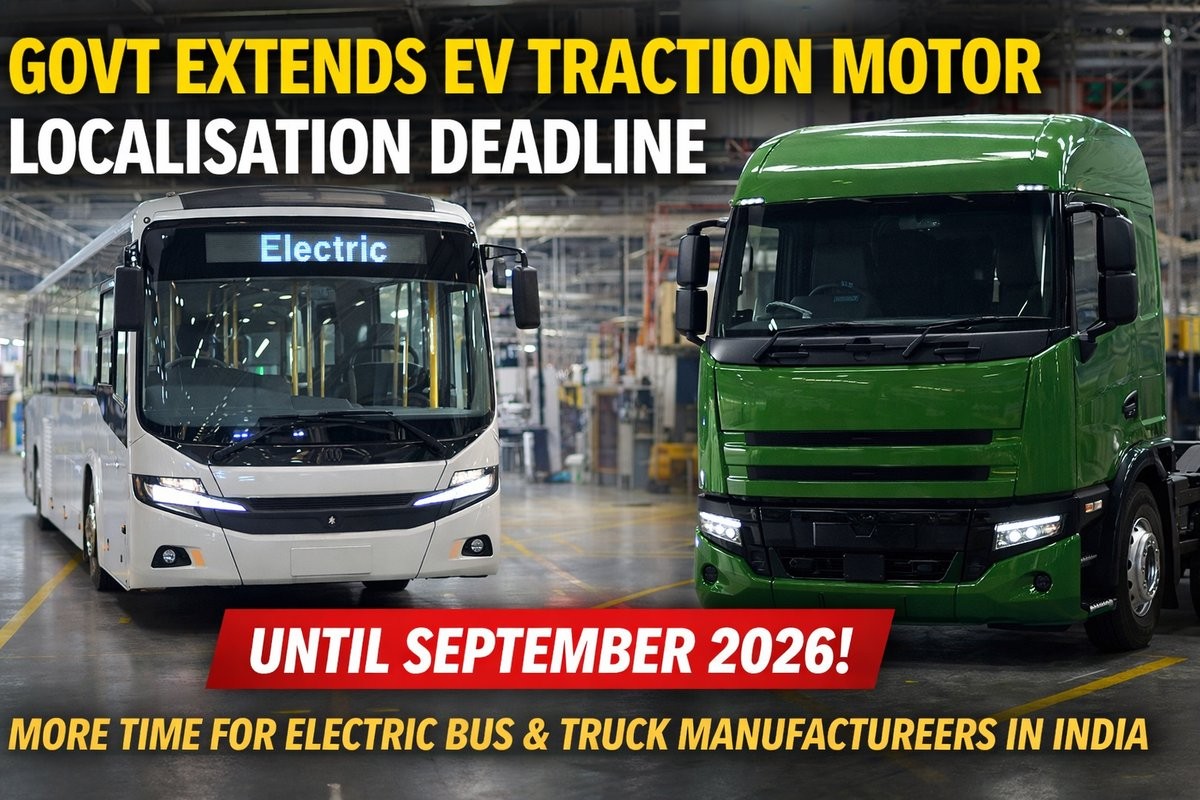
nIndia’s transition toward electric mobility received a major policy boost after the central government decided to extend the localisation deadline for traction motors used in electric buses and trucks. The move comes under the Prime Minister Electric Drive Revolution in Innovative Vehicle Enhancement (PM E-Drive) scheme, which aims to accelerate the adoption of electric vehicles across the country.n
nn
nUnder the revised policy, manufacturers of electric buses and trucks will be allowed to continue importing traction motors containing rare-earth magnets until September 1, 2026. The government has provided a six-month extension to the existing localisation timeline to help manufacturers overcome global supply chain challenges while continuing the rollout of electric commercial vehicles in India.n
nn
nThe decision is expected to support EV manufacturers who are currently working to build domestic production capabilities for advanced electric vehicle components. By offering additional time, policymakers hope to prevent disruptions in production while encouraging long-term localisation of key EV technologies.n
nn
Why the Government Extended the Deadline
nn
nElectric buses and trucks rely on high-performance traction motors that use rare-earth magnets. These magnets are essential for achieving high torque, efficiency and compact motor size. However, the global supply chain for rare-earth materials remains highly concentrated in a few countries.n
nn
nMost of the world’s rare-earth magnet production is currently dominated by China. This heavy reliance on imports has created supply uncertainties for EV manufacturers around the world. Any restrictions or disruptions in exports can directly affect the production of electric vehicles.n
nn
nIndian EV manufacturers have also faced similar challenges while sourcing traction motor components. To ensure that production schedules are not affected, the government decided to extend the localisation deadline under the PM E-Drive scheme.n
nn
nIndustry experts believe that the decision will help manufacturers maintain momentum in the electric vehicle market while continuing to develop domestic supply chains.n
nn
Understanding the PM E-Drive Scheme
nn
nThe PM E-Drive scheme is one of the Indian government’s flagship initiatives aimed at accelerating the adoption of electric mobility. The programme provides financial incentives to promote the purchase of electric vehicles and supports the development of EV manufacturing and infrastructure.n
nn
nThe scheme covers multiple EV categories including electric two-wheelers, three-wheelers, buses, trucks and ambulances. It also includes funding for charging infrastructure and incentives for manufacturers producing electric vehicles in India.n
nn
nThrough these incentives, the government aims to reduce the upfront cost of EVs and make them more accessible to consumers and fleet operators. The scheme also promotes domestic manufacturing by encouraging companies to produce EV components locally.n
nn
Importance of Electric Buses and Trucks
nn
nElectric buses and trucks play a crucial role in India’s strategy to reduce air pollution and carbon emissions. Heavy commercial vehicles consume large quantities of fuel and operate for long hours, making them a major contributor to emissions in urban areas.n
nn
nBy electrifying public transport and freight vehicles, the government hopes to significantly reduce pollution levels in major cities. Electric buses are already being deployed in several urban areas as part of public transport modernization programmes.n
nn
nSimilarly, electric trucks are expected to transform the logistics sector by offering lower operating costs and reduced environmental impact.n
nn
Role of Rare-Earth Magnets in EV Motors
nn
nRare-earth magnets are a critical component in electric vehicle motors. Most modern EVs use permanent magnet synchronous motors, which rely on rare-earth materials such as neodymium and praseodymium.n
nn
nThese materials allow electric motors to deliver high efficiency and strong torque while maintaining compact size. In heavy vehicles such as buses and trucks, these motors are essential for delivering the power required to carry heavy loads.n
nn
nHowever, because the supply chain for rare-earth magnets is heavily concentrated in a few countries, manufacturers often face difficulties in securing reliable supply.n
nn
Previous Localisation Timeline
nn
nThe localisation requirement for EV components was introduced under India’s phased manufacturing programme. The goal of this policy is to gradually increase the share of locally manufactured components in electric vehicles.n
nn
nInitially, manufacturers were required to localise traction motor production by September 2025. However, due to supply chain disruptions and industry concerns, the deadline was later extended to March 2026.n
nn
nWith the latest announcement, the government has now extended the deadline further to September 2026.n
nn
nOfficials have clarified that the extension is temporary and that manufacturers will still be expected to localise production over the long term.n
nn
Industry Response
nn
nThe decision has been widely welcomed by EV manufacturers and industry associations. Companies had previously raised concerns that achieving full localisation of traction motors within the original timeline would be difficult due to global supply chain constraints.n
nn
nBuilding a local supply chain for advanced EV components requires significant investment, technological expertise and time. Manufacturers must establish facilities for motor assembly, magnet production and related components.n
nn
nIndustry experts believe the extension will give companies the necessary time to scale up domestic manufacturing without affecting EV deployment plans.n
nn
India’s EV Manufacturing Goals
nn
nIndia has ambitious plans to become a major global hub for electric vehicle manufacturing. Government initiatives such as Make in India aim to strengthen domestic production capabilities and reduce reliance on imports.n
nn
nBy encouraging localisation of EV components, policymakers hope to create new manufacturing opportunities, generate employment and strengthen the country’s industrial ecosystem.n
nn
nDomestic production of key components such as batteries, electric motors and power electronics will play a vital role in achieving these goals.n
nn
Growth of the EV Market in India
nn
nThe Indian electric vehicle market has grown rapidly in recent years. Government incentives, rising fuel prices and increasing awareness about environmental sustainability have encouraged more consumers to adopt EVs.n
nn
nElectric two-wheelers and three-wheelers currently dominate the market, but adoption of electric buses and trucks is gradually increasing.n
nn
nAs battery technology improves and charging infrastructure expands, experts expect the electric commercial vehicle segment to grow significantly in the coming years.n
nn
Charging Infrastructure Development
nn
nCharging infrastructure is another critical factor for the growth of electric commercial vehicles. Electric buses and trucks require high-capacity charging stations capable of delivering large amounts of power quickly.n
nn
nThe government has allocated significant funding under the PM E-Drive scheme to expand public charging infrastructure across India. Charging stations are being installed in cities, highways and transport hubs.n
nn
nA strong charging network will enable fleet operators to transition to electric vehicles with greater confidence.n
nn
Future Outlook
nn
nThe electrification of commercial vehicles is expected to accelerate over the next decade as technology advances and costs continue to decline. Improvements in battery technology, charging speeds and vehicle efficiency are making electric trucks and buses increasingly viable.n
nn
nGovernment incentives and environmental regulations will also encourage fleet operators to adopt cleaner transportation solutions.n
nn
nWith supportive policies such as the PM E-Drive scheme, India is positioning itself as a major player in the global electric vehicle industry.n
nnn
nThe government’s decision to extend the localisation deadline for EV bus and truck motors reflects the need to balance domestic manufacturing goals with the realities of global supply chains. By allowing manufacturers more time to develop local capabilities, the policy ensures that India’s electric vehicle transition continues without disruption.n
nn
nAs the country moves toward a cleaner and more sustainable transportation system, initiatives like the PM E-Drive scheme will play a crucial role in shaping the future of mobility in India.n