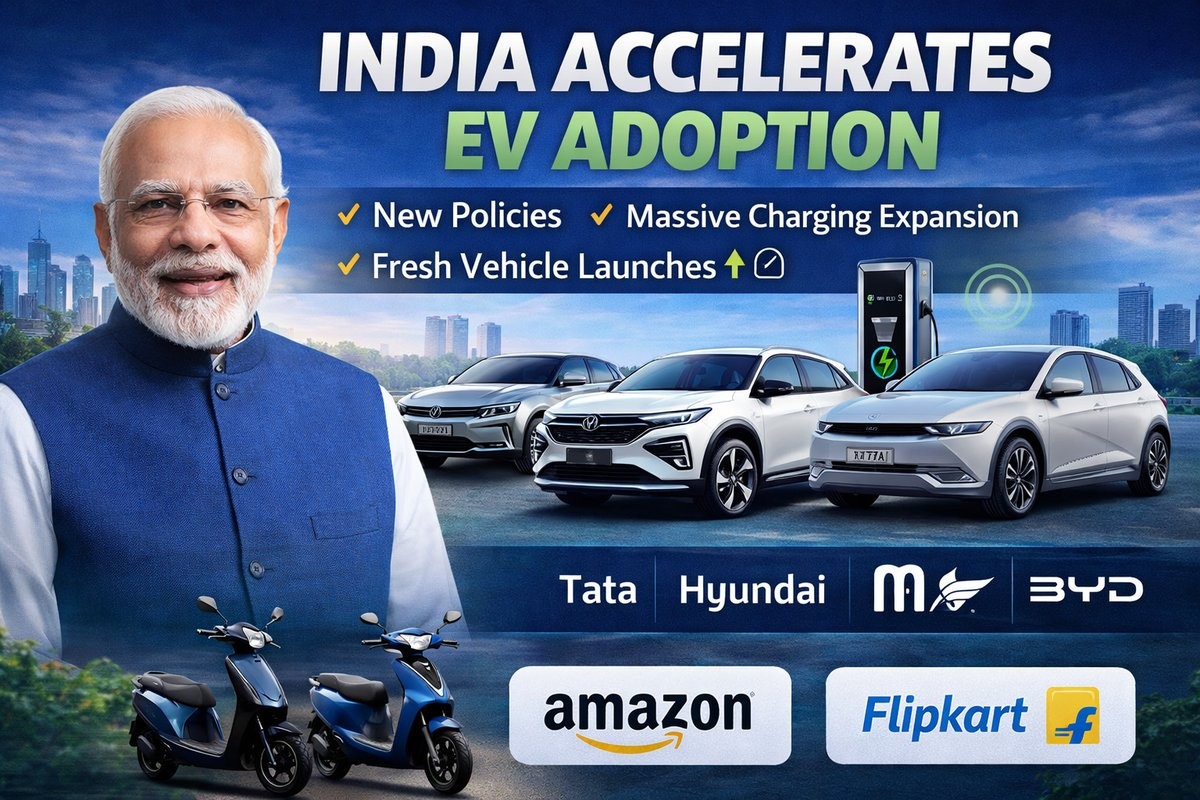
India’s electric vehicle (EV) sector is witnessing a major transformation as new developments across policy, infrastructure, and automobile manufacturing are accelerating the shift toward cleaner mobility. Today’s developments highlight a strong push from both the government and private players, making electric vehicles more accessible and practical for everyday use.
nn
Government Strengthens EV Push with New Initiatives
nn
The Indian government has announced fresh measures aimed at boosting EV adoption across the country. These initiatives focus on affordability, infrastructure, and local manufacturing. With rising fuel prices and growing environmental concerns, the push toward electric mobility has become more important than ever.
nn
Under the updated plan, subsidies for electric two-wheelers and cars have been increased, making them more affordable for middle-class buyers. Additional tax benefits and incentives are also being introduced to encourage people to switch from petrol and diesel vehicles.
nn
The government is also focusing on domestic battery production to reduce dependence on imports. This move is expected to lower costs and strengthen India’s position in the global EV supply chain.
nn
New EV Launches Across Segments
nn
Several major automobile companies have announced new electric vehicle launches today, targeting different segments of the market.
nn
Tata Motors has introduced an upgraded version of its electric SUV lineup, offering improved battery performance and extended driving range. The company continues to dominate the Indian EV market with its focus on affordability and reliability.
nn
Mahindra Electric has unveiled a new premium electric SUV with a futuristic design and advanced features. The vehicle is expected to appeal to buyers looking for high-performance electric options.
nn
International players such as Hyundai and BYD have also showcased their latest EV models in India. These vehicles come equipped with fast charging, connected technology, and enhanced safety features.
nn
The increasing number of launches is giving consumers more choices and helping to build confidence in electric mobility.
nn
Charging Infrastructure Expands Rapidly
nn
One of the biggest challenges for EV adoption has been the lack of charging infrastructure. However, today’s announcements indicate significant progress in this area.
nn
The government has confirmed plans to install over 15,000 new charging stations across India in the next year. These will be located in major cities, highways, and semi-urban areas to ensure better coverage.
nn
Private companies are also investing heavily in charging solutions. New technologies such as ultra-fast chargers and battery swapping stations are being introduced to reduce charging time and improve convenience.
nn
This expansion is expected to address range anxiety, one of the key concerns among potential EV buyers.
nn
Electric Two-Wheelers Drive Growth
nn
Electric two-wheelers are emerging as the fastest-growing segment in India’s EV market. Their affordability and low running costs make them an attractive option for daily commuters.
nn
Companies like Ola Electric, Ather Energy, and TVS Motor Company are expanding their product portfolios to meet increasing demand. These scooters offer features such as smart connectivity, long battery life, and fast charging.
nn
The growth of this segment is playing a crucial role in increasing overall EV adoption in the country.
nn
Corporate Sector Adopts EV Fleets
nn
Another major trend is the growing adoption of electric vehicles by businesses. E-commerce and logistics companies are shifting toward EV fleets to reduce fuel costs and meet sustainability goals.
nn
Companies such as Amazon and Flipkart are increasing their investments in electric delivery vehicles. This shift is expected to significantly reduce carbon emissions and operational expenses.
nn
Ride-hailing services are also exploring electric mobility as part of their long-term strategies.
nn
Advancements in Battery Technology
nn
Battery technology continues to evolve, playing a critical role in the growth of the EV industry. Today’s developments include progress in high-capacity batteries and faster charging solutions.
nn
Researchers are working on solid-state batteries, which promise better performance, higher energy density, and improved safety compared to traditional batteries.
nn
Indian startups are also contributing to innovation by developing cost-effective battery solutions tailored for local conditions.
nn
These advancements are expected to reduce EV costs and make them more accessible to a wider audience.
nn
Environmental Benefits and Sustainability
nn
The shift toward electric vehicles is closely linked to environmental sustainability. EVs produce zero tailpipe emissions, helping to reduce air pollution in cities.
nn
India aims to significantly lower its carbon footprint by promoting electric mobility. The transportation sector is one of the largest contributors to pollution, and EV adoption is seen as a key solution.
nn
Experts believe that increased EV usage will improve air quality and reduce dependence on fossil fuels.
nn
Challenges Remain
nn
Despite rapid progress, several challenges still need to be addressed:
nn
- n
- High upfront cost of EVs
- Limited charging infrastructure in rural areas
- Dependence on imported raw materials
- Lack of awareness among consumers
n
n
n
n
nn
Addressing these challenges will be essential for achieving widespread adoption.
nn
Future Outlook
nn
The future of India’s EV market looks promising. With strong government support, increasing investments, and growing consumer interest, the sector is expected to expand rapidly over the next decade.
nn
By 2030, electric vehicles are likely to make up a significant share of total vehicle sales in India. Continuous innovation and infrastructure development will play a key role in this transformation.
nnn
Today’s developments highlight the growing momentum of electric mobility in India. With new policies, vehicle launches, and infrastructure expansion, the country is moving steadily toward a cleaner and more sustainable future.
nn
As technology improves and costs decrease, electric vehicles are expected to become a common choice for Indian consumers. The EV revolution is no longer a distant goal but a reality that is unfolding rapidly.