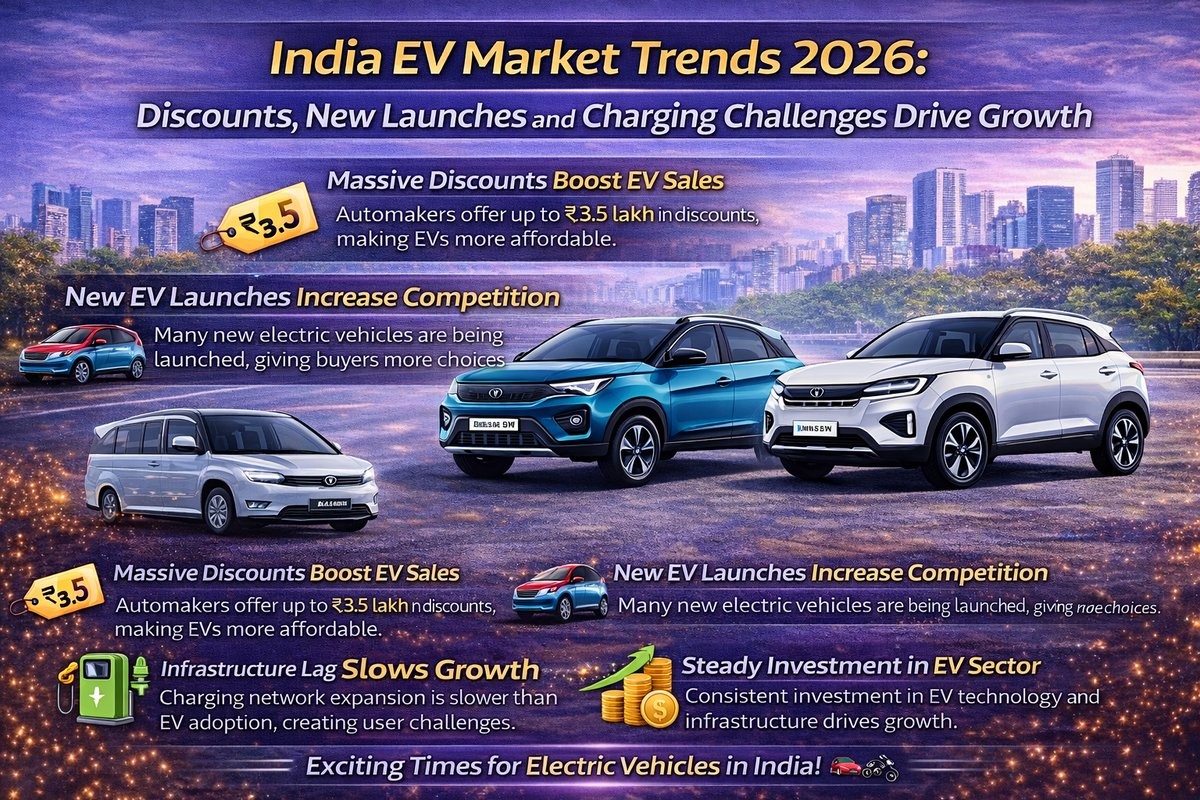
India’s electric vehicle (EV) market in 2026 is witnessing a major transformation, driven by a combination of strong consumer demand, aggressive pricing strategies, and continuous innovation by automakers. The EV ecosystem in the country is evolving rapidly as both domestic and global manufacturers expand their offerings across multiple segments, including affordable hatchbacks, premium SUVs, and commercial vehicles.
nn
The shift toward electric mobility is no longer limited to early adopters. A growing number of middle-class consumers are now considering EVs as a practical alternative to traditional petrol and diesel vehicles. This change is supported by rising fuel prices, increasing environmental awareness, and favorable government policies aimed at promoting clean transportation.
nn
At the same time, the market is also facing certain challenges, particularly in terms of charging infrastructure and cost barriers. These factors are shaping the current landscape of India’s EV industry and influencing how quickly adoption can scale.
nn
Massive Discounts Boost EV Sales
nn
One of the most significant trends in 2026 is the rise of aggressive discounting strategies by automakers. Companies are offering substantial price benefits to attract customers and clear inventory, making electric vehicles more accessible than ever before.
nn
In several cases, total benefits on select models have reached up to ₹3.5 lakh. These offers include direct cash discounts, exchange bonuses, loyalty benefits, and additional incentives for corporate buyers.
nn
This pricing strategy is helping reduce the upfront cost of EVs, which has traditionally been one of the biggest barriers to adoption. By lowering the effective purchase price, automakers are encouraging more buyers to consider electric vehicles.
nn
As a result, dealerships are witnessing increased footfall, and conversion rates for EV purchases are improving steadily. The affordability factor is becoming a key driver of growth in the current market.
nn
New EV Launches Increase Competition
nn
The Indian EV market is experiencing a wave of new product launches across multiple segments. Automakers are introducing vehicles with improved range, better performance, and advanced technology to capture consumer interest.
nn
From compact electric hatchbacks designed for city use to premium electric SUVs offering long-range capabilities, the variety of options available to buyers has increased significantly. This expansion is creating a highly competitive environment where manufacturers are continuously upgrading their offerings.
nn
New entrants are also entering the market, bringing fresh designs and innovative features. Established brands are responding by enhancing their existing models and launching new variants to stay competitive.
nn
This surge in product availability is benefiting consumers, who now have more choices based on their budget, preferences, and usage requirements. It is also pushing automakers to focus on quality, performance, and customer experience.
nn
Strong Growth but Infrastructure Lag
nn
While EV adoption is growing rapidly, the expansion of charging infrastructure has not kept pace with the increasing number of vehicles on the road. This gap remains one of the most critical challenges facing the industry.
nn
In urban areas, the availability of charging stations has improved, but it is still limited compared to traditional fuel stations. In smaller cities and rural regions, charging infrastructure is even more scarce.
nn
This creates challenges for EV users, particularly when it comes to long-distance travel. Range anxiety continues to be a concern for many potential buyers who are unsure about charging availability during extended trips.
nn
To address this issue, both government and private players are investing in expanding charging networks. Fast-charging stations are being installed on highways and in key urban locations to improve accessibility.
nn
However, the pace of infrastructure development needs to accelerate further to match the growing demand and ensure a seamless user experience.
nn
Fleet and Commercial EV Segment Expands
nn
The commercial EV segment is emerging as a major growth driver in 2026. Fleet operators, ride-hailing services, and logistics companies are increasingly adopting electric vehicles to reduce operating costs and improve efficiency.
nn
Electric cars and vans used in fleet operations offer lower running costs compared to traditional vehicles, making them an attractive option for businesses. This cost advantage is encouraging large-scale adoption in urban areas.
nn
Automakers are also focusing on this segment by introducing vehicles specifically designed for commercial use. These models are optimized for durability, efficiency, and long operating hours.
nn
The expansion of the fleet segment is playing a crucial role in increasing overall EV adoption, as it introduces electric mobility to a wider audience through shared and public transportation systems.
nn
Changing Consumer Behavior
nn
Consumer behavior in the automotive market is undergoing a noticeable shift. Buyers are becoming more open to the idea of owning electric vehicles and are actively exploring EV options.
nn
Unlike previous years, where vehicle purchases were often concentrated around festive seasons, demand for EVs is now more consistent throughout the year. This indicates a growing level of confidence in electric mobility.
nn
Consumers are also paying closer attention to factors such as running costs, maintenance expenses, and environmental impact. EVs are increasingly seen as a long-term investment rather than just a trend.
nn
The availability of more information, improved awareness, and better product offerings are contributing to this shift in mindset.
nn
Investment Trends Remain Steady
nn
The EV sector continues to attract significant investment from both domestic and international players. Automakers, technology companies, and startups are investing in various aspects of the EV ecosystem, including battery technology, charging infrastructure, and software development.
nn
While some large-scale investment deals have slowed compared to previous years, overall interest in the sector remains strong. Companies are focusing on long-term growth and building sustainable business models.
nn
Research and development efforts are also increasing, with a focus on improving battery efficiency, reducing costs, and enhancing vehicle performance.
nn
These investments are expected to play a key role in shaping the future of the EV market and driving further innovation.
nn
Technology Advancements Improve EV Appeal
nn
Technological advancements are making electric vehicles more appealing to consumers. Improvements in battery technology are leading to higher energy density, longer driving range, and faster charging times.
nn
Connected car features, smart infotainment systems, and advanced driver assistance technologies are becoming more common in EVs, enhancing the overall driving experience.
nn
Manufacturers are also focusing on improving build quality, safety features, and interior comfort to match or exceed traditional vehicles.
nn
These advancements are helping bridge the gap between EVs and conventional cars, making electric mobility a more attractive option for a broader audience.
nn
Government Policies Continue to Support Growth
nn
The Indian government continues to play an important role in promoting electric mobility through various policies and incentives. Subsidies, tax benefits, and initiatives aimed at expanding infrastructure are supporting the growth of the EV market.
nn
State governments are also introducing their own EV policies to encourage adoption at the regional level. These measures are helping reduce the cost of ownership and making EVs more accessible.
nn
Policy support is expected to remain a key factor in driving future growth and ensuring the long-term success of the EV ecosystem.
nn
Future Outlook
nn
The future of India’s EV market looks promising, with strong growth expected in the coming years. Continued innovation, improved infrastructure, and increasing competition will further accelerate adoption.
nn
Affordable EVs will play a crucial role in expanding the market, while premium models will continue to drive technological advancements.
nn
As the ecosystem matures, electric vehicles are expected to become a mainstream choice for Indian consumers, transforming the country’s transportation landscape.