Published: March 12, 2026 | By: News Desk
nn
nIndia’s electric vehicle (EV) ecosystem is witnessing rapid developments in 2026 as startups, established automakers, and government initiatives accelerate the country’s transition toward clean mobility. The Indian automotive industry is currently undergoing a major transformation as the adoption of electric vehicles increases across passenger cars, two-wheelers, buses, and commercial vehicles.n
nn
nMultiple announcements this week highlight how India is strengthening its EV infrastructure and technology ecosystem. These developments include the unveiling of affordable electric vehicles, new EV battery manufacturing projects, and government policies aimed at electrifying public transportation fleets.n
nn
Blinq Mobility Introduces Affordable Electric Car
nn
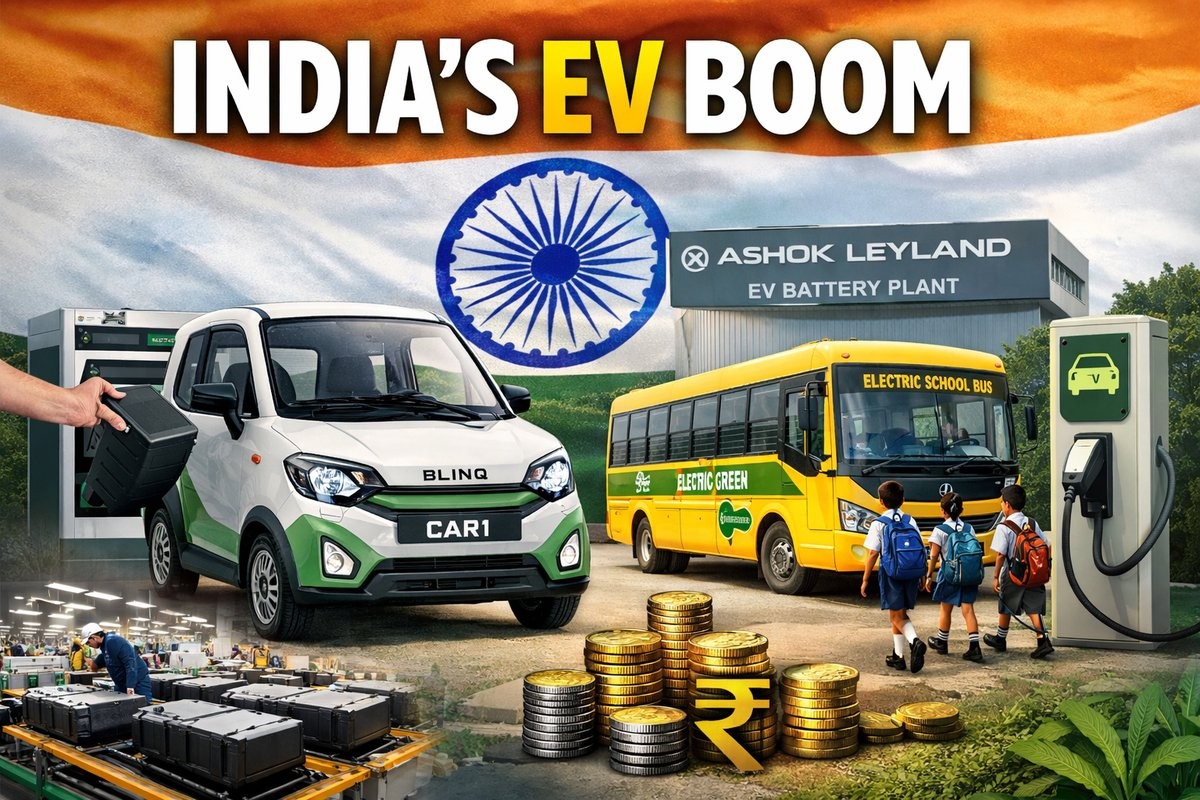
nOne of the most notable developments comes from Gurugram-based startup Blinq Mobility, which has recently unveiled its first prototype electric vehicle called Car1. The company claims the vehicle could be priced cheaper than a traditional autorickshaw, making it one of the most affordable electric cars in India.n
nn
nThe vehicle is designed primarily for urban mobility and commercial fleet operations. It uses battery-swapping technology that allows drivers to replace depleted batteries quickly instead of waiting for long charging sessions.n
nn
Key highlights of Blinq Mobility Car1:
nn
- n
- Compact electric car designed for city transportation
- Expected to be one of the most affordable EVs in India
- Battery-swapping technology for faster energy replacement
- Designed for fleet operators and delivery services
- Lower running costs compared to petrol vehicles
n
n
n
n
n
nn
Ashok Leyland Starts EV Battery Manufacturing Project
nn
nIndia’s leading commercial vehicle manufacturer Ashok Leyland has begun construction of a new EV battery pack manufacturing facility in Tamil Nadu. The project aims to strengthen domestic EV manufacturing capabilities and reduce dependence on imported battery components.n
nn
Main objectives of the EV battery plant include:
nn
- n
- Increasing domestic EV battery production
- Reducing import dependency for battery components
- Lowering the overall cost of electric vehicles
- Supporting large-scale electric commercial vehicle production
- Creating new employment opportunities in EV manufacturing
n
n
n
n
n
nn
Delhi Plans Electric School Bus Fleet
nn
nGovernment policy is also playing an important role in the EV transition. Authorities in Delhi are planning to convert around 30% of school buses to electric vehicles by 2030. The initiative aims to reduce pollution in urban areas while promoting the adoption of electric mobility in public transportation.n
nn
Key goals of the policy:
nn
- n
- Reducing air pollution in major cities
- Encouraging electric public transport
- Promoting cleaner mobility for school transportation
- Providing incentives to support EV adoption
n
n
n
n
nn
Kinetic Engineering Invests in EV Component Expansion
nn
nPrivate companies are also increasing investments in the EV supply chain. Kinetic Engineering has secured a ₹40-crore promoter investment to expand its EV component manufacturing business and support new electric mobility projects.n
nn
The investment will support:
nn
- n
- Development of advanced EV drivetrain components
- Expansion of EV manufacturing capacity
- Support for electric two-wheeler production
- Strengthening India’s EV supply chain ecosystem
n
n
n
n
nn
Future Outlook for India’s EV Market
nn
nIndustry experts believe India’s EV sector is entering a phase of rapid expansion. Improvements in battery technology, expansion of charging infrastructure, and supportive government policies are expected to accelerate EV adoption across the country.n
nn
nWith startups launching innovative electric vehicles and major manufacturers investing heavily in EV infrastructure, India’s electric mobility ecosystem appears poised for significant growth in the coming years.n