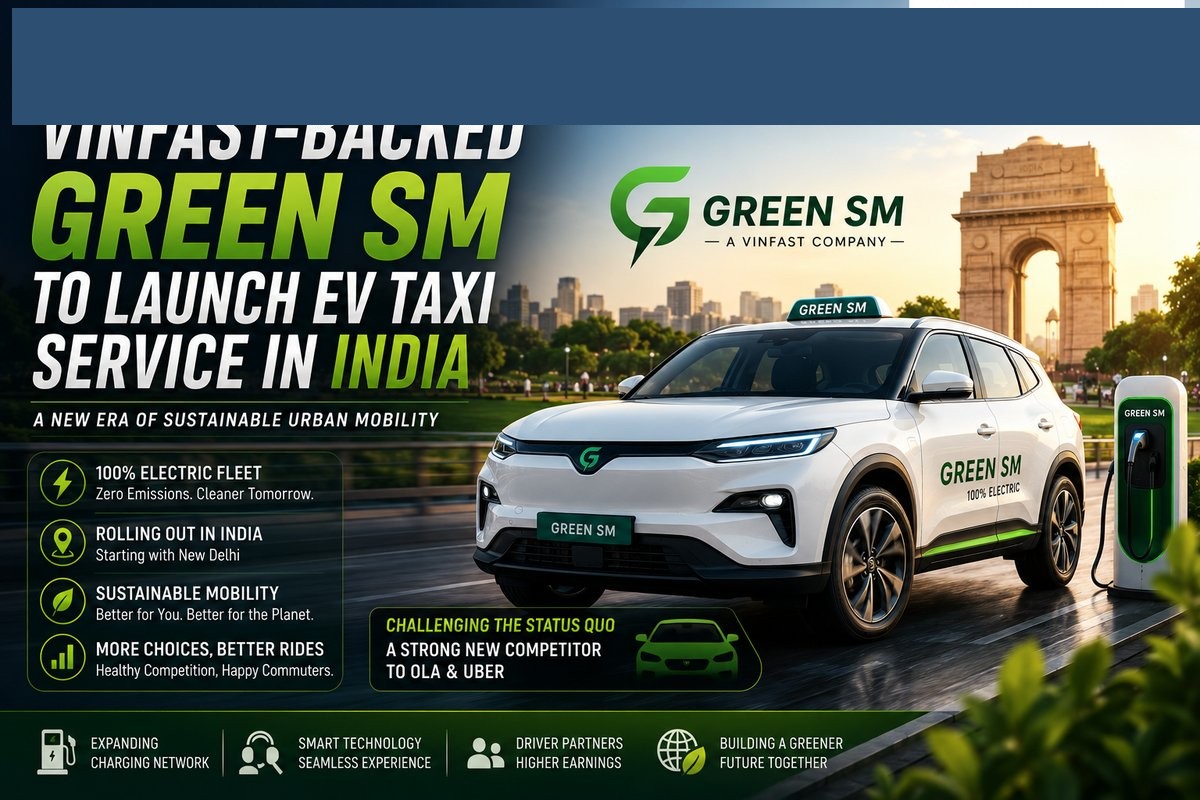
India’s electric mobility ecosystem is witnessing another major development as Green SM, the electric ride-hailing service backed by global EV manufacturer VinFast, prepares for its entry into the Indian market. The move is expected to create significant competition in the ride-hailing industry while accelerating the adoption of electric vehicles for daily transportation.
nn
The Indian transportation sector has undergone a massive transformation over the last decade. App-based mobility services have become an integral part of urban life, helping millions of commuters travel conveniently across cities. However, the growing number of vehicles on roads has also increased concerns related to pollution, fuel consumption, and urban sustainability.
nn
Electric mobility is increasingly being viewed as the solution to many of these challenges. With governments, consumers, and manufacturers focusing on sustainability, the arrival of a dedicated electric taxi service could represent a significant step toward reducing emissions while improving transportation efficiency.
nn
A New Player in India’s Ride-Hailing Industry
nn
Green SM has established itself as a prominent electric mobility service in international markets and is now preparing to bring its experience and expertise to India. Unlike traditional ride-hailing services that operate mixed fleets, Green SM focuses entirely on electric vehicles.
nn
This approach aligns closely with India’s growing focus on clean mobility and carbon reduction initiatives. The company aims to provide an environmentally friendly transportation alternative while maintaining high standards of service quality, affordability, and reliability.
nn
The company’s entry comes at a time when electric vehicles are gaining wider acceptance among Indian consumers. Improved charging infrastructure, better battery technology, and a growing range of EV options have created favorable conditions for electric mobility businesses.
nn
Why India Is an Attractive Market
nn
India is one of the fastest-growing automotive markets in the world. Rapid urbanization, increasing smartphone penetration, and widespread adoption of digital payment systems have created a strong foundation for app-based transportation services.
nn
Several factors make India particularly attractive for an electric ride-hailing business:
nn
- n
- Growing urban population
- Increasing demand for sustainable transportation
- Government support for EV adoption
- Expansion of charging infrastructure
- Rising fuel costs
- Consumer awareness about environmental issues
n
n
n
n
n
n
nn
As cities continue to grow, transportation providers are under increasing pressure to offer cleaner and more efficient mobility solutions. Electric taxis provide an opportunity to reduce pollution while delivering cost-effective transportation services.
nn
The Rise of Electric Mobility in India
nn
The Indian EV market has experienced remarkable growth over the past few years. What was once considered a niche segment has evolved into one of the most dynamic areas of the automotive industry.
nn
Manufacturers are launching new electric cars, SUVs, two-wheelers, and commercial vehicles at an unprecedented pace. Consumers are showing greater interest in EVs due to improved driving range, lower operating costs, and enhanced technology features.
nn
Electric vehicles offer several advantages compared to traditional internal combustion engine vehicles:
nn
- n
- Lower running costs
- Reduced maintenance requirements
- Zero tailpipe emissions
- Smoother driving experience
- Lower noise levels
- Improved energy efficiency
n
n
n
n
n
n
nn
These benefits make EVs particularly suitable for commercial fleet operations where vehicles cover significant distances daily.
nn
Impact on the Ride-Hailing Sector
nn
The arrival of Green SM could reshape the competitive landscape of India’s ride-hailing market. Established players have already begun incorporating electric vehicles into their fleets, but a dedicated EV-first operator introduces a new level of competition.
nn
Consumers are becoming increasingly conscious of sustainability. Many passengers are willing to choose environmentally friendly transportation options when available.
nn
An all-electric fleet can also offer additional advantages:
nn
- n
- Lower operating expenses
- Reduced fuel dependency
- Lower carbon footprint
- Quieter ride quality
- Modern vehicle technology
- Enhanced passenger experience
n
n
n
n
n
n
nn
As competition intensifies, customers may benefit from improved service quality, competitive pricing, and more sustainable transportation choices.
nn
VinFast’s Global Ambitions
nn
VinFast has rapidly emerged as one of the most ambitious electric vehicle manufacturers globally. The company has expanded its presence across multiple international markets while investing heavily in electric mobility technologies.
nn
The company’s focus extends beyond manufacturing vehicles. It is increasingly building a broader mobility ecosystem that includes transportation services, charging infrastructure, and customer-focused digital platforms.
nn
India represents a critical market in VinFast’s global expansion strategy. The country’s large population, growing middle class, and increasing interest in sustainable mobility make it an attractive destination for long-term investment.
nn
By supporting Green SM’s expansion into India, VinFast can strengthen its presence in the market while promoting greater awareness of electric mobility solutions.
nn
Benefits for Drivers
nn
Electric taxi services offer several advantages not only for passengers but also for drivers.
nn
Traditional taxi drivers often face challenges related to fluctuating fuel prices and high maintenance costs. Electric vehicles can help address these concerns through lower operating expenses and simplified maintenance requirements.
nn
Potential benefits for drivers include:
nn
- n
- Lower fuel costs
- Reduced servicing expenses
- Better energy efficiency
- Smoother driving experience
- Access to modern vehicle technology
- Potential for higher profitability
n
n
n
n
n
n
nn
As charging infrastructure expands, the practicality of operating electric taxis continues to improve.
nn
Importance of Charging Infrastructure
nn
The success of any large-scale electric taxi operation depends heavily on charging infrastructure availability.
nn
India has made significant progress in expanding its charging network, with public and private stakeholders investing in new charging stations across major cities.
nn
Key developments include:
nn
- n
- Fast charging corridors
- Urban charging hubs
- Highway charging stations
- Commercial fleet charging solutions
- Smart charging management systems
n
n
n
n
n
nn
Improved charging accessibility reduces downtime and increases operational efficiency for electric fleets.
nn
Environmental Impact
nn
Transportation remains one of the largest contributors to urban pollution in many Indian cities.
nn
Electric taxis offer a practical solution for reducing emissions while maintaining transportation accessibility.
nn
Potential environmental benefits include:
nn
- n
- Reduced air pollution
- Lower greenhouse gas emissions
- Reduced dependence on fossil fuels
- Improved urban air quality
- Support for sustainability goals
n
n
n
n
n
nn
As electric fleets grow, their contribution to environmental improvement could become increasingly significant.
nn
Technology and Customer Experience
nn
Modern electric vehicles often incorporate advanced technology features that enhance both driver and passenger experiences.
nn
Passengers increasingly expect:
nn
- n
- Smart connectivity features
- Digital payment integration
- Real-time ride tracking
- Comfortable interiors
- Enhanced safety systems
- Reliable app-based services
n
n
n
n
n
n
nn
Electric mobility companies are leveraging technology to deliver seamless transportation experiences while improving operational efficiency.
nn
Challenges Ahead
nn
Despite the opportunities, entering India’s ride-hailing market presents several challenges.
nn
Key obstacles may include:
nn
- n
- Intense competition
- Infrastructure requirements
- Consumer education
- Fleet scaling challenges
- Operational logistics
- Regulatory compliance
n
n
n
n
n
n
nn
Successfully navigating these challenges will be critical for long-term success.
nn
Future Outlook
nn
The future of urban mobility in India is increasingly electric, connected, and technology-driven.
nn
As governments continue supporting EV adoption and manufacturers introduce new products, electric transportation services are expected to become more common.
nn
Industry analysts believe dedicated electric ride-hailing services could play a major role in accelerating EV adoption among mainstream consumers. Many users may experience electric vehicles for the first time through such services, influencing future vehicle purchasing decisions.
nn
The integration of electric taxis, charging infrastructure, and smart mobility solutions represents a major step toward creating cleaner and more efficient cities.
nn
The planned entry of Green SM into India marks an important milestone in the evolution of the country’s electric mobility ecosystem. As consumers increasingly embrace sustainable transportation options, dedicated electric ride-hailing services could become a key driver of future growth.
nn
With strong market potential, improving infrastructure, and rising awareness about environmental sustainability, India appears well-positioned to support the next generation of electric mobility solutions.
nn
The coming months will reveal how this new entrant impacts the competitive landscape, but one thing is clear: India’s journey toward a cleaner, smarter, and more sustainable transportation future continues to gain momentum.